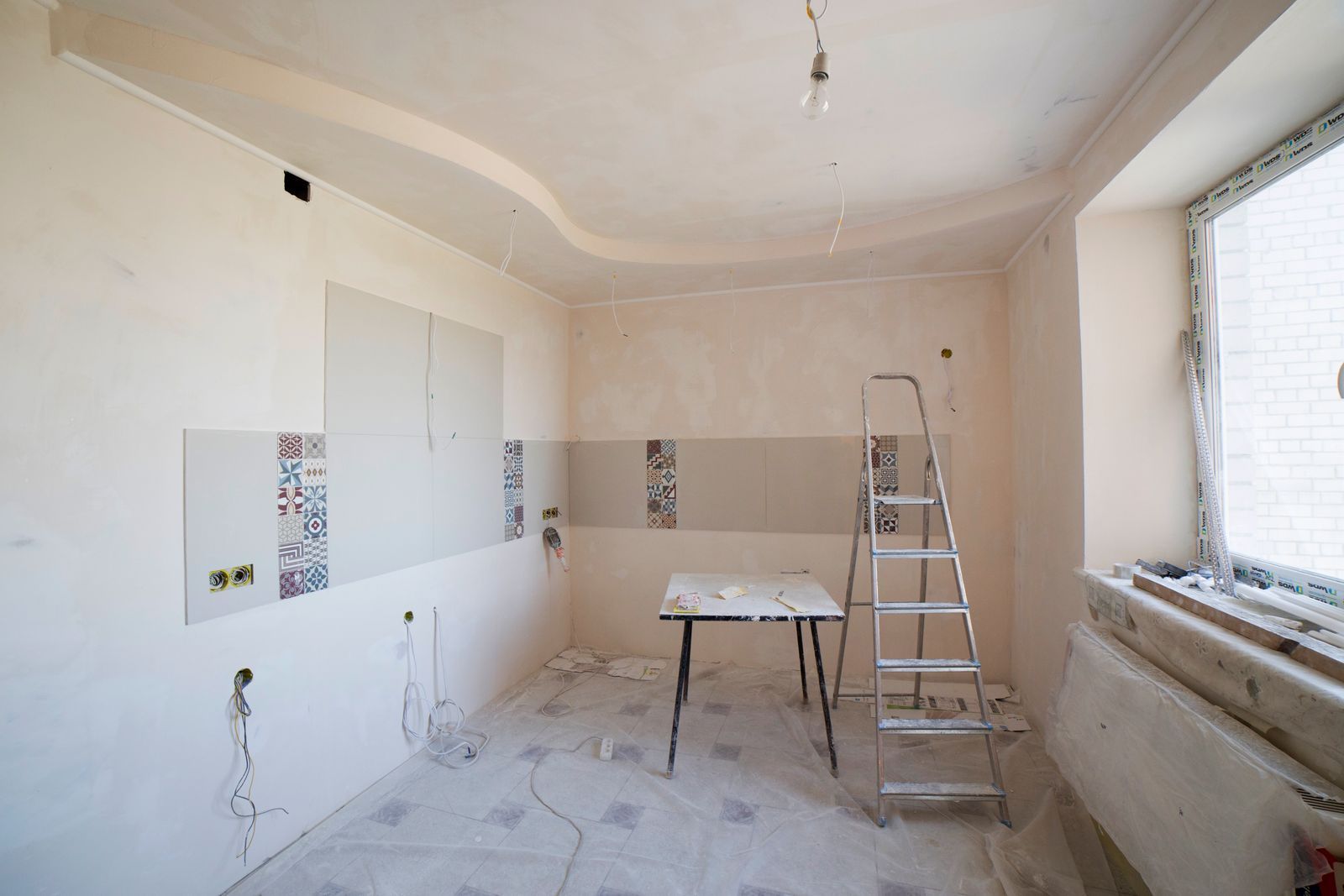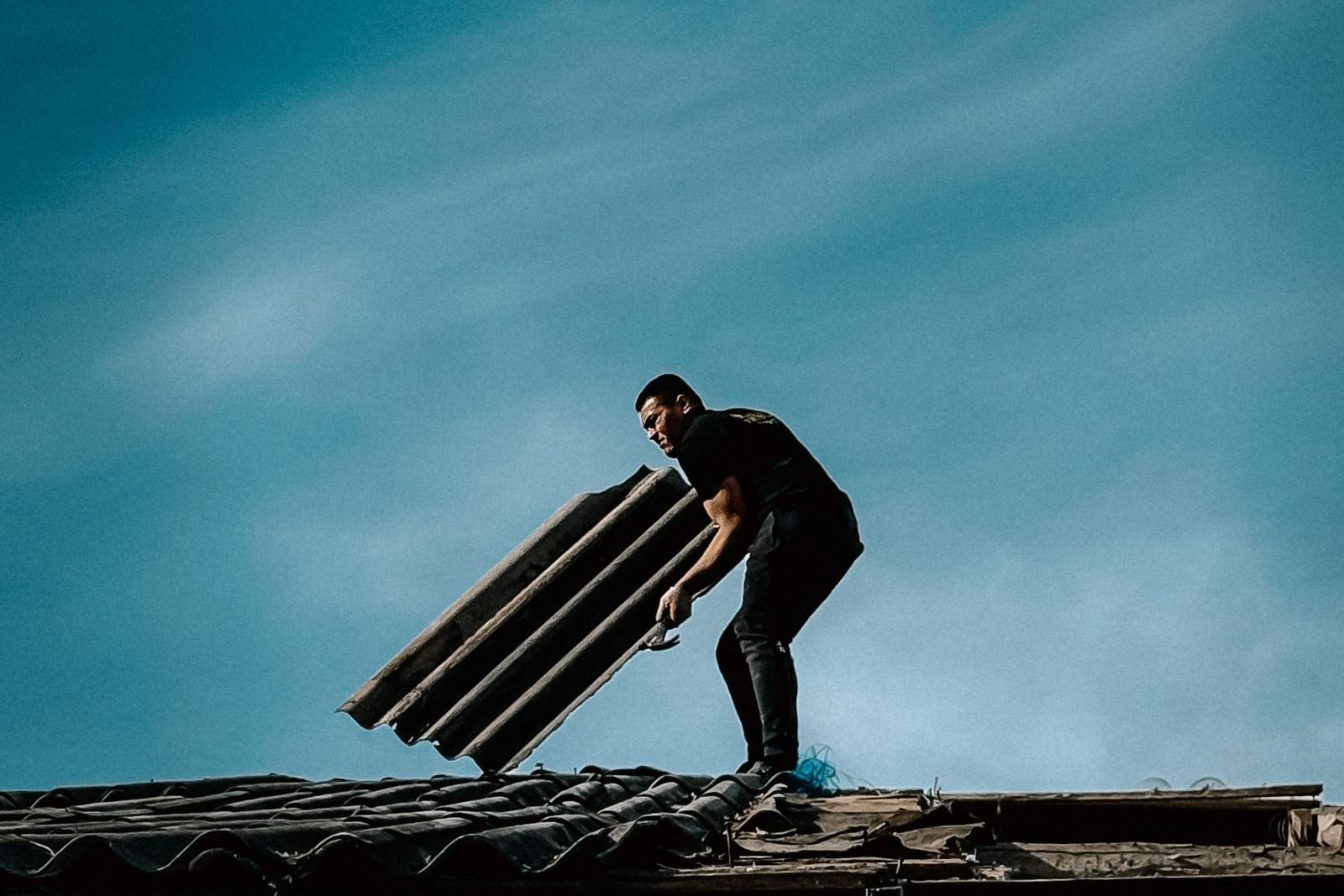
Dean has just climbed down a ladder in Stockport after the worst storm of the winter. Half the rear slope has lost its tiles, the chimney flashing has lifted and the back bedroom ceiling is dripping. The homeowner is already on the phone to her insurer. The job will be a little over six thousand pounds, and Dean has to buy the tiles, book the scaffold and start within days. Roofing invoicing is different from most trades: big material bills, big hire bills, a diary the weather controls, and a third party in the background holding the money.
Why roofing invoices need a deposit
Most of what a roofer sells is bought in before a single tile is lifted: tiles, battens, membrane, lead, and then the scaffold, which is paid for whether the job runs to plan or not. On a £6,000 re-roof you can easily be £2,500 out of pocket before your labour has earned a penny.
So ask for a deposit, every time, without apology. Nothing in UK law sets a maximum for a homeowner job; the sensible amount covers the materials and the scaffold booking, which for most pitched-roof work is 25% to 40% of the quote. State it on the quote, raise a proforma invoice for it, and do not order the tiles until it has cleared. Keep the money accessible; if you cannot do the job, it is still theirs.
For bigger jobs, a full re-roof on a semi, say, split the rest into stages: a payment when the roof is stripped and felted, the balance on completion. Our guide to deposits and staged payments walks through the paperwork.
The lines a roofing invoice needs
A roofing customer rarely sees the finished work up close; all they get is a quieter loft and your word. The invoice is where they see what they paid for, so it has to tell the story of the job in plain lines:
- Strip and dispose. What came off, how much, and the skip on its own line.
- Materials, by type. Membrane and battens; tiles or slates (name the product and whether they match the existing); ridge, verge and hip details; lead by code and length. If you are matching reclaimed slates, say so, because the price will not look like new.
- Scaffold. Its own line, with the elevation and the hire period.
- Labour. Days and people, or a fixed figure. Even on a fixed price, "2 roofers, 3 days" makes the number make sense.
- Extras agreed on site. The rotten rafter end under the felt, the extra lead to the dormer. Separate lines, each with the date you agreed it. More in invoicing variations and extras.
- Less deposit received. With the proforma number and the date, so the balance is obvious.
Alongside the legal basics (see how to write an invoice), add the property address if it differs from the billing address, and a guarantee note: "Workmanship guaranteed for 10 years; materials carry the manufacturer's guarantee." That note is worth more than a leaflet.
Scaffold, skips and other hire costs
Scaffold is the line customers argue about, because they did not expect it to cost as much as it does. Head that off on the quote: state the elevation, the hire period included (usually one or two weeks) and what happens if the job overruns, then carry the same line onto the invoice. If you hire it in, invoice it at the scaffolder's price plus a margin for organising it and carrying the risk; just do not disguise the margin as the scaffolder's price. If the customer wants to book their own, put it on the quote ("Scaffold to be provided by the customer, rear elevation, erected by [date]") and it is off your invoice and off your risk.
Skips, tower hire, a cherry picker for a chimney: same rule. A line each, a hire period each.
The weather and your paperwork
You cannot strip a roof with rain forecast, and your customer knows it. What they do not always know is that a wet fortnight does not pause the scaffold hire. Your quote and terms should say three things:
- Start and finish dates are weather dependent, and you will not strip a roof with rain forecast within the working day.
- The price includes a stated scaffold period; extra weeks caused by weather are charged at the scaffolder's cost, invoice available on request.
- Deposits are not refundable because of weather delays; they are held against materials already bought.
Keep the tone human: "If the weather beats us, we will keep you posted and we will not leave a roof open overnight." For wording you can lift, see simple terms and conditions for tradespeople.
Worked example: storm damage repair for a homeowner
Back to Dean. He quoted the rear slope and chimney, took a deposit of £1,800 against a proforma, and finished later than planned after one washed-out morning and a rotten batten run under the felt. His firm is VAT registered, so VAT is shown on the whole supply.
DW Roofing Ltd, 14 Mill Lane, Stockport SK4 2AB. VAT no. GB 123 4567 89
Invoice INV-0218, dated 3 November 2026. Payment due within 7 days.
Bill to: Mrs H. Okafor, 27 Beech Road, Stockport SK4 3CD. Property: as above.
Reference: Storm damage, rear elevation. Insurer claim ref. HOM-448211.
| Description | Qty | Unit | Amount |
|---|---|---|---|
| Strip storm-damaged concrete tiles, rear slope, and dispose | 24 m² | £15.00 | £360.00 |
| Breathable membrane and 25 x 50 treated battens, supplied and fitted | 24 m² | £17.50 | £420.00 |
| Concrete interlocking tiles to match existing, supplied and fitted | 24 m² | £57.50 | £1,380.00 |
| Code 4 lead flashing to chimney, supplied and dressed | 6 m | £90.00 | £540.00 |
| Replace rotten batten run found on strip, agreed by text 28 Oct | 1 | £110.00 | £110.00 |
| Scaffold hire, rear elevation, 1 week (Northwest Access Ltd) | 1 | £680.00 | £680.00 |
| 6-yard skip and waste disposal | 1 | £260.00 | £260.00 |
| Labour: 2 roofers, 3 days | 6 days | £240.00 | £1,440.00 |
| Net total | £5,190.00 | ||
| VAT at 20% | £1,038.00 | ||
| Total | £6,228.00 | ||
| Less deposit received 21 Oct (PRO-0057) | -£1,800.00 | ||
| Balance due | £4,428.00 | ||
Notes: Workmanship guaranteed for 10 years. Photographs of the stripped roof and new membrane attached. Pay by card using the Pay button or by bank transfer to the details below.
The extra batten run is its own line with the date it was agreed. The scaffold names the hire firm, which quietly answers "is that really what scaffold costs?". And the deposit is deducted against the proforma number, so the customer and the loss adjuster can follow the money.
Insurance work for a homeowner
Storm claims are a big part of many roofers' winters, and they confuse people. Unless the insurer or its loss adjuster has instructed you directly and in writing, your customer is the homeowner. They claim from the insurer; the insurer pays them (less the excess); they pay you. Your invoice is addressed to the homeowner, and your payment terms run against the homeowner, not the claim.
Make the loss adjuster's life easy and the money moves faster:
- Put the claim reference on the quote and the invoice.
- Describe the damage and the cause ("tiles displaced by wind, 24 m², rear slope"), not just "roof repair".
- Separate storm damage from anything else. The tired front slope "while you are up there" is a second quote and a second invoice; mixing them is how claims get queried.
- Send the quote as a PDF the homeowner can forward in one tap. Insurers often want two quotes; being first and clearest helps.
Say gently on the invoice that payment is due within your normal term regardless of the claim's progress. Because the homeowner is a consumer, statutory late payment interest does not apply if they drag their feet; see how to chase an unpaid invoice for what you can do instead. If an insurer does instruct you directly, you are working for a business: invoice the insurer, quote its instruction number, expect 30-day terms, and the Late Payment of Commercial Debts (Interest) Act applies if they are slow.
Working for builders and the CIS
If a builder brings you in to roof an extension, you are a subcontractor and the Construction Industry Scheme applies: the builder deducts 20% of your labour (30% if you are not registered) and pays it to HMRC against your tax. Materials, scaffold and VAT are not deducted from. Show labour and materials separately, add the deduction line and your UTR; the worked example is in our CIS invoice guide. None of it applies to Mrs Okafor: a homeowner is not a CIS contractor.
Getting paid before the scaffold comes down
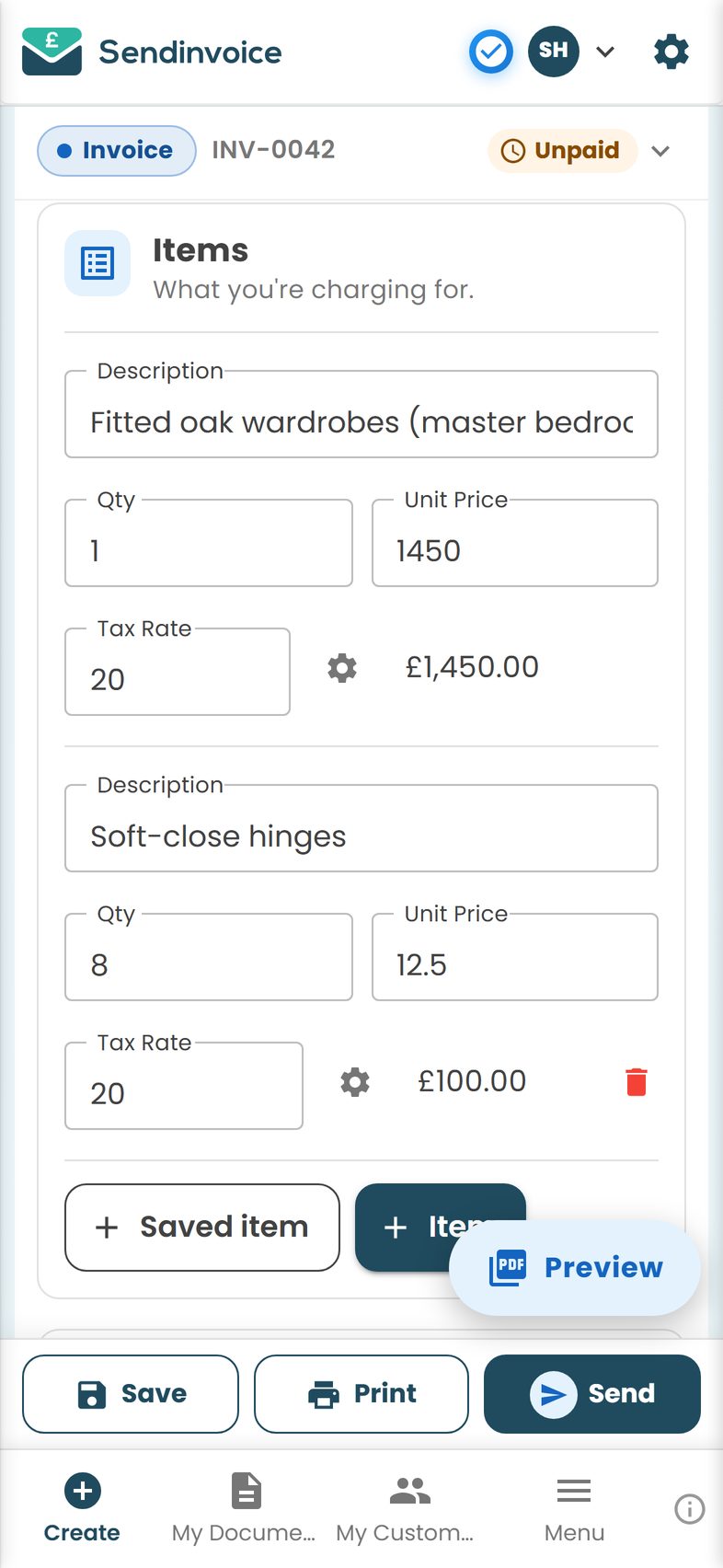
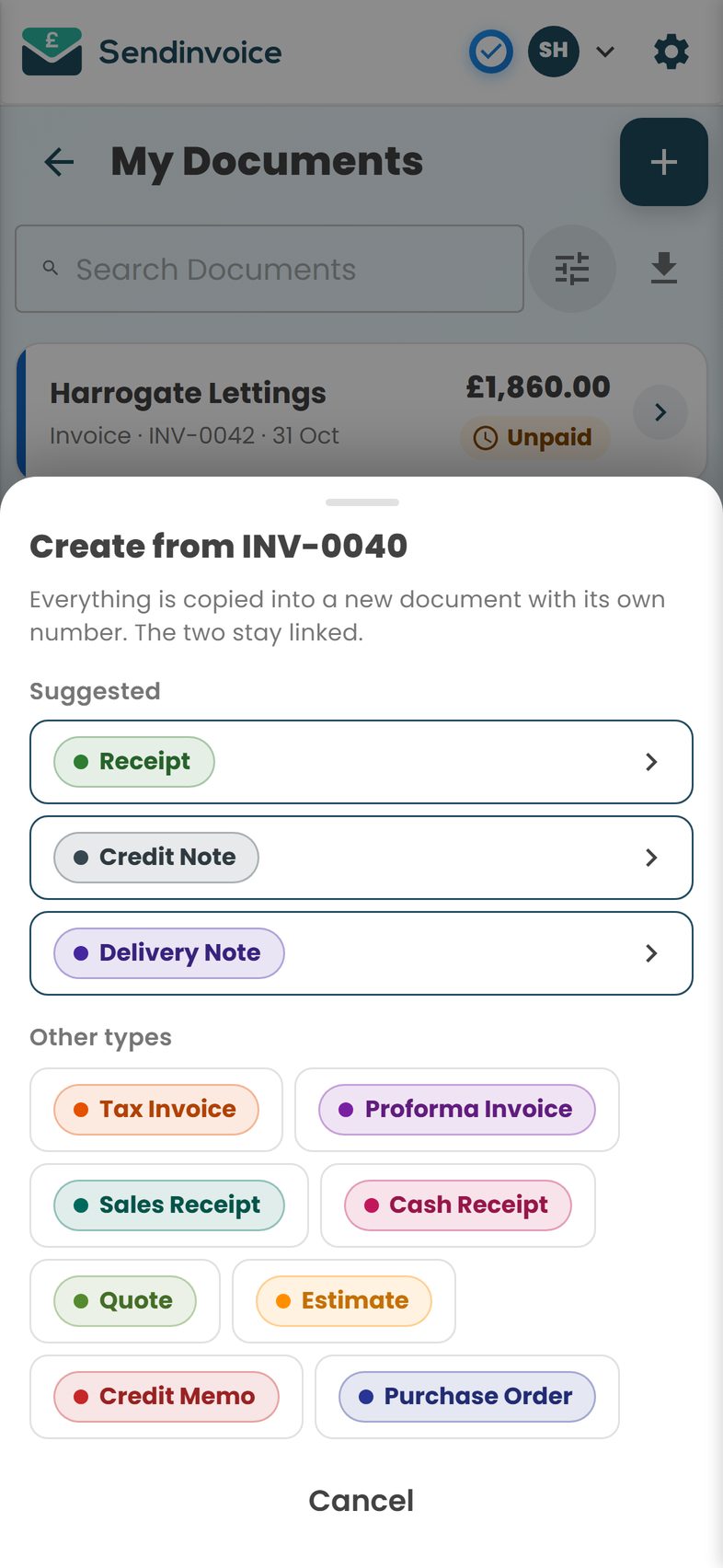
The best moment to be paid for a roof is the afternoon the scaffold comes down and the customer stands in the garden looking up at it. Send the invoice from your phone before you leave. In SendInvoice the quote becomes the invoice in one tap, the email carries the PDF and a Pay button, and the invoice flips to Paid when the card payment goes through. Proforma, invoice and receipt stay linked under the same customer, which is what you want when the loss adjuster rings in March.
Roofing is a trade of big numbers and nervous customers. The invoice that works makes the big numbers legible: what came off, what went on, what the scaffold was for, what was agreed on the day and what was already paid.
Do this in SendInvoice
Quote the roof, raise the deposit proforma and the final invoice from the same document, and send it from the scaffold with a Pay button in the email. Free to create and preview; £5 a month to send, remind and take card payments.
Create a free invoice See the £5/month planFrequently asked questions
How much deposit should a roofer ask for?
There is no legal maximum for work for a homeowner. Most roofers ask for enough to cover the materials and the scaffold booking, which usually lands between 25% and 40% of the quote. Put the deposit amount on the quote, raise a proforma invoice for it, and only order tiles once it has cleared.
Should scaffold be a separate line on a roofing invoice?
Yes. Scaffold is a big, visible cost and customers want to see it on its own. Show the hire period and the elevation it covers. If you hire it in, you can add a handling margin, but keep the line honest; if the customer books their own scaffold, say so on the quote and leave it off your invoice.
Who do I invoice for an insurance repair, the homeowner or the insurer?
Unless the insurer or its loss adjuster has instructed you directly in writing, your contract is with the homeowner, so you invoice them. The insurer pays the homeowner, who pays you. Itemise the invoice carefully so the loss adjuster can match it to the claim, and do not invoice for work that was not storm damage.
Can I charge for days lost to bad weather?
Only if your quote or terms say so, and even then most roofers do not for ordinary rain. What you can and should do is state on the quote that start and finish dates are weather dependent, that scaffold hire runs on regardless, and that extra weeks of scaffold caused by weather may be charged at cost.
Do I need to show VAT on a roofing invoice?
Only if you are VAT registered. If you are, VAT applies to the whole job, labour and materials, at the standard rate, and the invoice must show your VAT number, the rate and the VAT amount. Some energy-saving works qualify for reduced rates; check HMRC's notices. If you are not registered, do not mention VAT at all.
What if I am roofing for a builder rather than a homeowner?
Then you are a subcontractor and the Construction Industry Scheme applies. The builder deducts 20% (30% if you are not CIS registered) from the labour part of your invoice and pays it to HMRC on your behalf. Show labour and materials separately, add the deduction line and your UTR, and keep the deduction statements for your tax return.