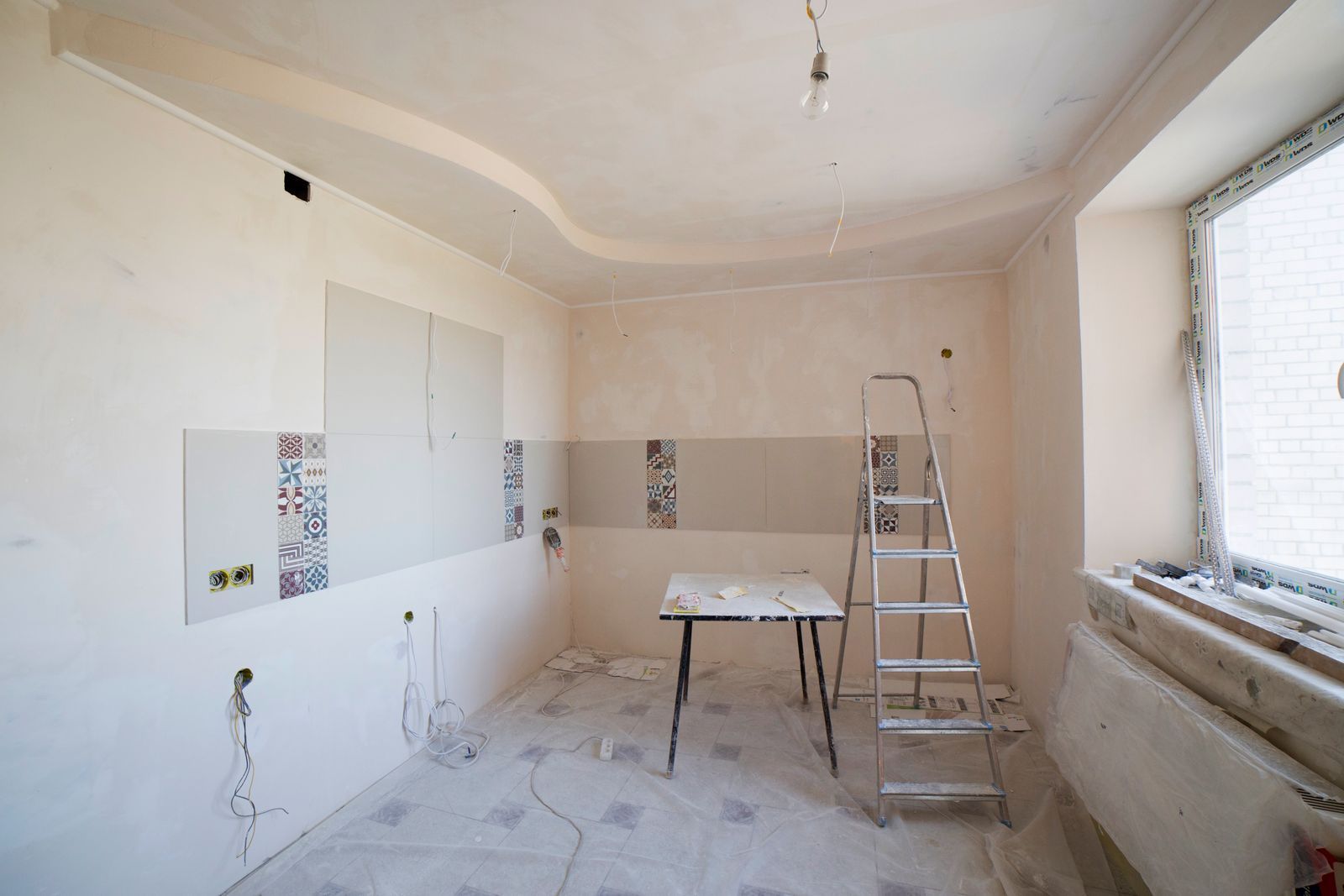
Marcus is a roofer in Stockport. He has just priced a strip and re-tile on a 1930s semi at £7,800, and the tiles, battens and membrane alone are £2,900 before a ladder goes up. Two years ago he bought the materials for a job like this out of his own pocket, the customer "changed their mind" the week before the start, and he spent a month selling pallets of tiles at a loss. He does not do that any more. Now the job starts with a deposit, moves on stage invoices, and ends with a final invoice, and every one of those is a document the customer can see and pay on their phone.
Why deposits exist, and what they are not
A deposit does three jobs. It covers the materials you have to order before you earn a penny. It tells you the customer is serious, which matters when you are turning other work away to hold the slot. And it keeps your cash flow level on a job that will run for weeks.
What a deposit is not is a profit. It is the customer's money, held against work you have promised to do. If the job does not happen because of you, it goes back. If you treat it as yours the moment it lands, the first cancelled job will hurt twice.
Deposits and stage payments also change the conversation at the end. A customer who has paid 70% of a job in stages, each one tied to something they could see, is far less likely to argue over the last 30% than one presented with a single £7,800 bill on the day you take the scaffold down.
How much to ask for
Nothing in UK law sets a maximum deposit for work done for a private customer. Common practice is:
- 10% to 30% of the job for most domestic work. The bigger the job, the lower the percentage tends to be.
- The cost of the materials you need to order up front, which is often the most honest figure and the easiest to explain: "The deposit covers the tiles and membrane, which I have to order a fortnight before we start."
- More than a third only for bespoke or non-returnable items you are buying on the customer's behalf: a made-to-measure window, a particular boiler, a kitchen worktop cut to template. Say why on the quote.
A 50% deposit on a £600 job looks greedy and makes a careful customer wonder whether you will turn up. A 10% deposit on a £20,000 extension leaves you carrying too much risk. Marcus asks for 30% because that roughly matches his materials, and he says so in one line on the quote.
The paper trail from quote to final invoice
For a job with a deposit and stages, you will send four or five documents. Each one has a job, and keeping them straight is what stops arguments later.
- The quote. States the scope, the price, the deposit and the stage plan: "30% on acceptance, 35% on completion of strip and membrane, 35% on completion." If you have not already, read how to write a trade quote that protects you; the stage plan belongs there, not in a text sent later.
- A proforma invoice for the deposit. It looks like an invoice and has a number the customer can quote, but it is a request for payment in advance rather than a record of work done. Reference the quote on it.
- A receipt when the deposit arrives. One tap in SendInvoice creates a receipt from the proforma. Customers like having it, and it is your evidence of what was paid and when.
- Stage invoices as each milestone is reached. Each one describes what has been done, not just "stage 2".
- The final invoice, which shows the whole job, deducts the deposit and the stage payments already received, and leaves the balance due.
If you are VAT registered, be aware that receiving a deposit usually creates a tax point, which means VAT is due on it in that period and the customer needs a proper VAT invoice for it. Many VAT-registered trades simply issue a VAT invoice for the deposit instead of a proforma. Check with your accountant; it is a small thing that trips people up.
Splitting a job into stages
Stage payments are for jobs that run longer than a week or so, or where your outlay climbs steeply partway through. The rules of thumb:
- Tie stages to things the customer can see. "Strip complete, membrane and battens on" is a stage. "End of week two" is not, because weather, deliveries and a rotten purlin can all move week two.
- Keep yourself close to the money. At any point in the job, the gap between what you have spent in labour and materials and what you have been paid should be something you could absorb if the customer stopped paying tomorrow. For most sole traders that is a week or two of work, no more.
- Make the final payment meaningful but not frightening. A final stage of 10% is easy for a customer to "forget". A final stage of 50% is a cliff edge for you. Somewhere between 20% and 35% works for most domestic jobs.
- Invoice the stage the day it is reached. Not the Friday after. Send it from the van while the customer is still looking at the new membrane.
If your customer is a business (a landlord's company, a main contractor, a shop), the Construction Act gives you a legal right to staged payments on construction contracts lasting more than 45 days, with a payment notice process on top. It does not apply to work for homeowners, so for domestic jobs the stage plan is simply part of the contract you agreed on the quote. For contractor work, see invoicing a main contractor as a subcontractor.
Worked example: Marcus's re-roof
Marcus is a sole trader and is not VAT registered, so there is no VAT on any of these. The quote, QUO-0074, is for £7,800 with a stage plan of 30 / 35 / 35.
Proforma invoice PRO-0031 (sent on acceptance of QUO-0074)
| Description | Amount |
|---|---|
| Deposit, 30% of quoted price, strip and re-tile of main roof at 14 Elm Grove, as per QUO-0074. Covers tiles, membrane, battens and fixings to be ordered before start. | £2,340.00 |
| Total due | £2,340.00 |
Stage invoice INV-0112 (sent the day the strip, membrane and battens were done)
| Description | Amount |
|---|---|
| Stage 1: old tiles and battens stripped and removed, breathable membrane fitted, new treated battens fixed. 35% of quoted price as per QUO-0074. | £2,730.00 |
| Total due | £2,730.00 |
Final invoice INV-0118 (sent on completion)
| Description | Amount |
|---|---|
| Strip and re-tile of main roof, 14 Elm Grove, as per QUO-0074: labour, tiles, ridge, membrane, battens, fixings, scaffold and waste removal | £7,800.00 |
| Less deposit received 3 October (PRO-0031) | -£2,340.00 |
| Less stage 1 payment received 17 October (INV-0112) | -£2,730.00 |
| Balance due | £2,730.00 |
Notes: Not VAT registered. Payment due within 7 days. Pay by card using the link in this email or by bank transfer to the details below. Ten-year workmanship guarantee as per quote.
Notice the final invoice tells the whole story on one page: the full price, what was paid and when, and what is left. If the customer's partner, who never saw the quote, opens it, they can follow it without a phone call.
Keeping it fair, and legal
A few points that protect the customer, which in turn protect you, because fair terms are the ones that hold up when things go wrong.
- Keep deposit money accessible. If you cannot do the job, it goes back. If you have spent it on last month's wages, that is a horrible fortnight.
- Cooling off. When you agree a job in the customer's home, a consumer generally has 14 days to cancel under the Consumer Contracts Regulations. If they want you to start inside that window, get them to say so in writing; a text saying "yes please, start Monday" is enough. You can then charge for work done if they cancel, but you may still owe back the unused deposit. This is an area to keep cautious on; our simple terms for tradespeople post covers the wording.
- Say what the deposit is for. "Covers materials ordered before start" is the honest line, and it explains why a late cancellation might cost the customer something.
- Receipt every payment. A deposit paid in cash with no receipt is a dispute waiting to happen. The receipts for cash jobs post explains why it matters for HMRC too.
- Do not hold the customer's money hostage. If you are three weeks late starting because of other jobs, offer the deposit back rather than making them chase. The ones who stay will stay for the right reasons.
Getting the stages paid without chasing
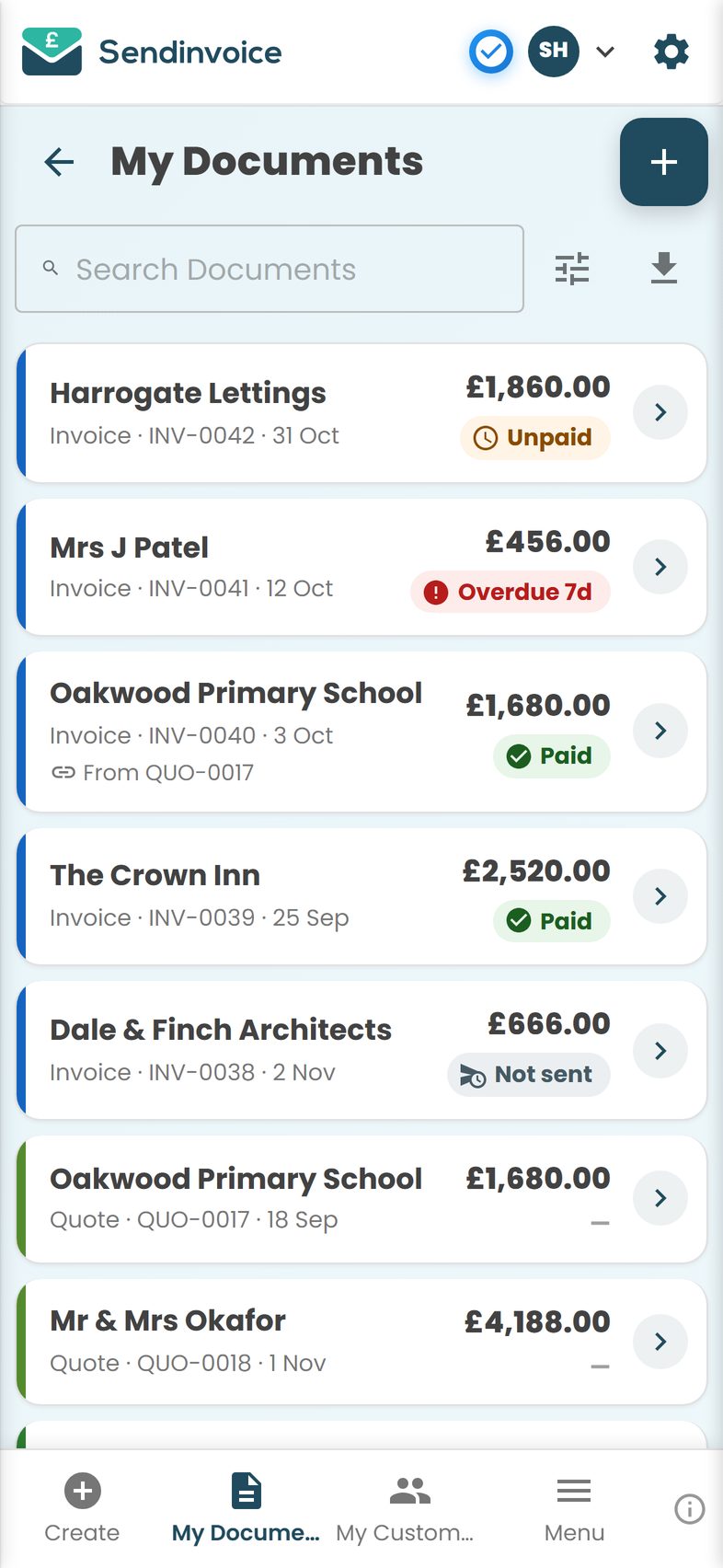
Stage payments only smooth your cash flow if they actually get paid on the day. The habit that works: send the proforma or stage invoice by email the moment the stage is reached, with a Pay button in the email, and tell the customer face to face that you have sent it. People pay a £2,730 invoice far more readily when the roofer who just showed them the finished battens is standing in the kitchen than when it arrives three days later.
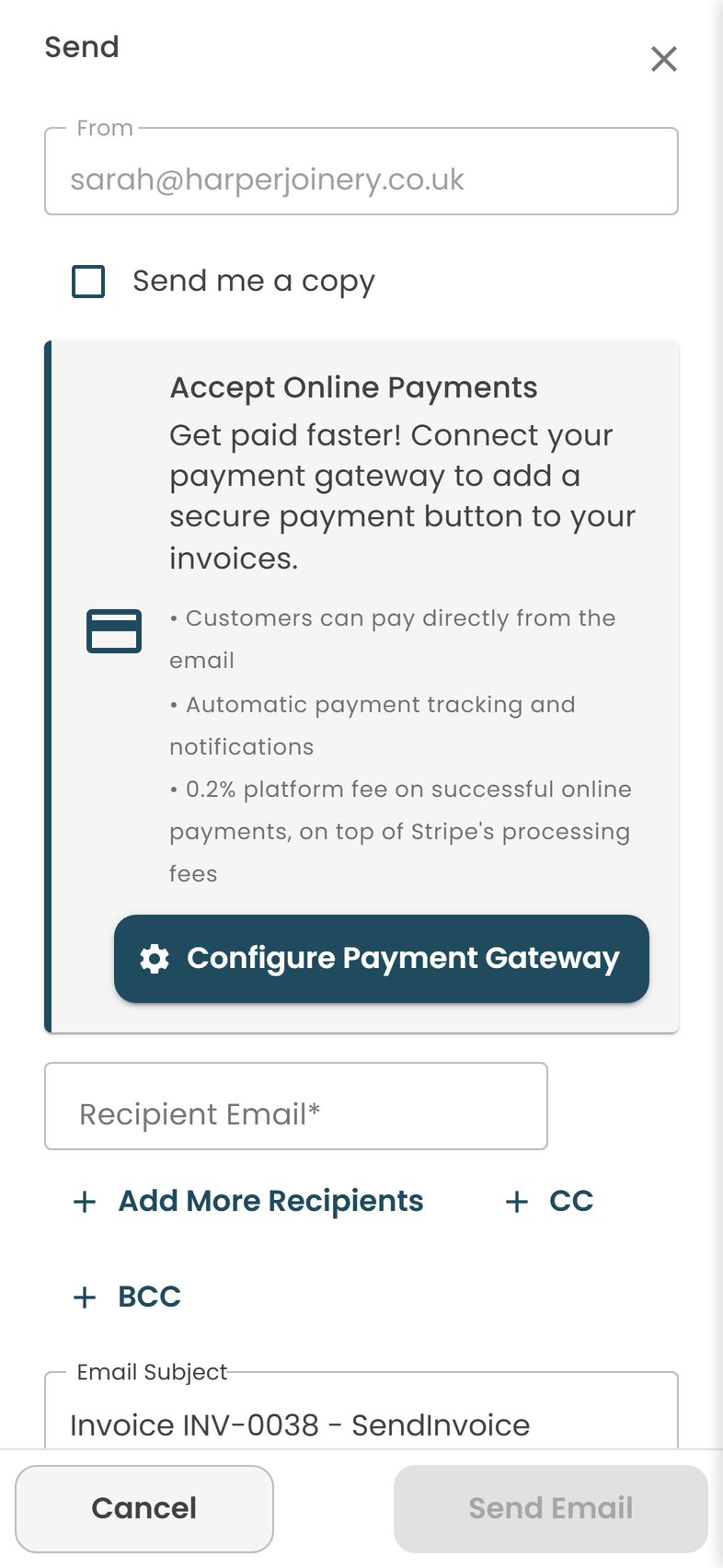
In SendInvoice the proforma, each stage invoice and the final invoice can all be created from the original quote, so the customer details, the job description and the reference to QUO-0074 carry over and the documents stay linked. When a card payment comes through, the document flips to Paid on its own; a bank transfer you mark as paid by hand. The My Documents list then shows exactly where the job stands: deposit Paid, stage 1 Paid, final Unpaid, which is the one to keep an eye on.
If the job changes partway through (a rotten purlin, a request for a Velux while the roof is open), do not quietly fold it into the final invoice and hope. Price it, get a yes in writing, and add it as its own line or its own invoice; invoicing variations and extras walks through it.
Do this in SendInvoice
Quote the job, turn the accepted quote into a deposit proforma in one tap, then stage invoices and a final invoice that all reference it, each with a Pay button in the email. Free to create and preview; £5 a month to send and take card payments from the roof.
Create a free invoice See the £5/month planFrequently asked questions
How much deposit can a tradesperson ask for in the UK?
There is no legal maximum for work done for a private customer. Common practice is 10% to 30% of the job, or roughly the cost of the materials you need to order before you start. Anything much above a third makes customers nervous and is hard to justify unless you are buying something expensive and non-returnable on their behalf, such as a bespoke window or a specific boiler.
Which document do I send to ask for a deposit?
A proforma invoice. It looks like an invoice, carries a number, and gives the customer something to pay against, but it is not a final tax invoice and does not go in your sales ledger as a sale. When the deposit lands, issue a receipt. The deposit is then deducted on the stage invoices or the final invoice.
Is a deposit refundable if I cannot do the job?
Yes. A deposit is money paid towards work you have agreed to do. If you cannot do it, the customer is owed it back, less any genuine costs you incurred at their request that you cannot recover. Keep deposit money accessible rather than spending it on another job's wages, and say in your terms what happens if either side cancels.
How do I split a big job into stages?
Tie each stage to something the customer can see, not to a calendar date: strip and membrane done, first fix done, plastering done, completion. Keep each stage small enough that you are never more than a week or two of labour and materials ahead of the money, and make the final payment large enough to matter but not so large the customer sits on it.
Does a deposit affect the 14-day cooling-off period?
For a contract agreed in the customer's home, a consumer generally has 14 days to cancel. If they want you to start inside that window, ask them to confirm it in writing (a text is fine). You can then charge for work done if they cancel, but you may still need to refund the unused part of the deposit. Keep claims cautious and check current guidance.
If I am VAT registered, do I charge VAT on a deposit?
Receiving a deposit normally creates a tax point, so you account for VAT on it in that period and the customer needs a VAT invoice for it. The simplest approach is to issue a VAT invoice for the deposit when it is paid rather than a proforma alone. Check with your accountant, as the rules on tax points can catch people out.