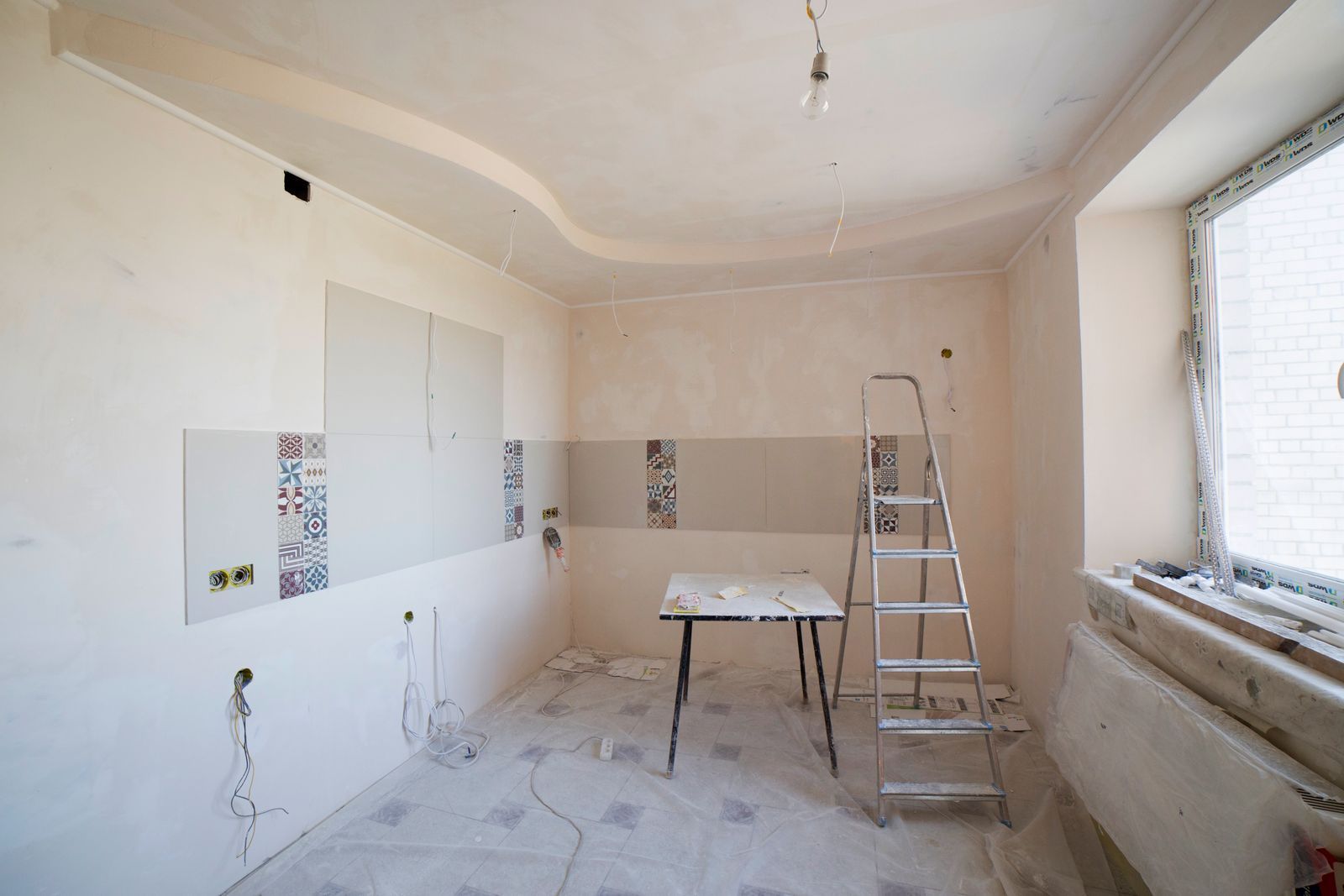
Sam runs a three-man building firm out of a yard in Dudley. The current job is a single-storey rear extension in Stourbridge: £34,000 plus VAT, twelve weeks, a homeowner who is friendly and watches every brick. Week six, the roof is on, and Sam is at the kitchen table at nine at night working out what to invoice: the stage sum, the extra steel that nobody could have predicted, and the drain the plans said was not there. This post is about invoicing as a builder when the jobs are big, the money comes in stages and the customer is paying from a remortgage, not a company account.
What a builder's invoice needs
The legal basics apply: a unique number, your business name and address, the customer's name and address, the date, a description, and the amount due. Okafor Building is VAT registered (most firms with employees are, because the materials alone push turnover past the threshold), so each invoice also carries the VAT number, rate, VAT amount, tax point and net total. If you are a sole-trader builder below the threshold, leave VAT off entirely; invoicing when not VAT registered explains how.
Beyond the legal list, a builder's invoice needs to answer three questions the customer will ask: which stage is this, what did you agree the stage was worth, and what are these other lines? So:
- The contract reference. The quote number the customer signed, so every invoice points back to the agreed price.
- The stage, named and numbered, with the trigger: "Stage 3 of 6: roof on and watertight".
- The stage sum, as a percentage of the contract and as a figure.
- Variations as separate lines, each with a number and the date it was agreed.
- What has been paid so far, in the notes, so the customer can see the running total without a spreadsheet.
Staged payments on an extension
Nobody should be invoicing £40,000 at the end of a twelve-week job, and no customer should be paying it all at the start. Stages solve both problems, and the key is to tie each one to something the customer can walk out into the garden and see.
A typical schedule for a single-storey extension, agreed on the quote before the first skip arrives:
| Stage | Trigger | Share of contract | On £34,000 net |
|---|---|---|---|
| 1 | Deposit on signing | 10% | £3,400 |
| 2 | Foundations and slab complete | 20% | £6,800 |
| 3 | Walls up, roof on and watertight | 20% | £6,800 |
| 4 | Windows, doors, first fix and plaster | 20% | £6,800 |
| 5 | Second fix, floors and decoration | 20% | £6,800 |
| 6 | Completion and snagging signed off | 10% | £3,400 |
The deposit goes on a proforma invoice, because it is money in advance against a job not yet started, not a bill for work done. Each later stage is a normal invoice with a short term (7 days is typical; the customer has usually had the money sitting ready since the remortgage) and a clear statement that the next stage starts when the payment lands. Say that last part on the quote, politely, and you will rarely need to say it on site.
Two legal notes for domestic work. The Consumer Contracts Regulations give a homeowner a 14-day cancellation right when the contract was agreed in their home; if they want you to start inside that window, get the request in writing. And the Construction Act (the Housing Grants, Construction and Regeneration Act 1996), which gives business-to-business construction contracts a right to staged payments and adjudication, does not apply to contracts with residential occupiers, so on a homeowner job your contract is what you both signed and nothing more. Make it a good one. The deposits and staged payments post has wording for the schedule.
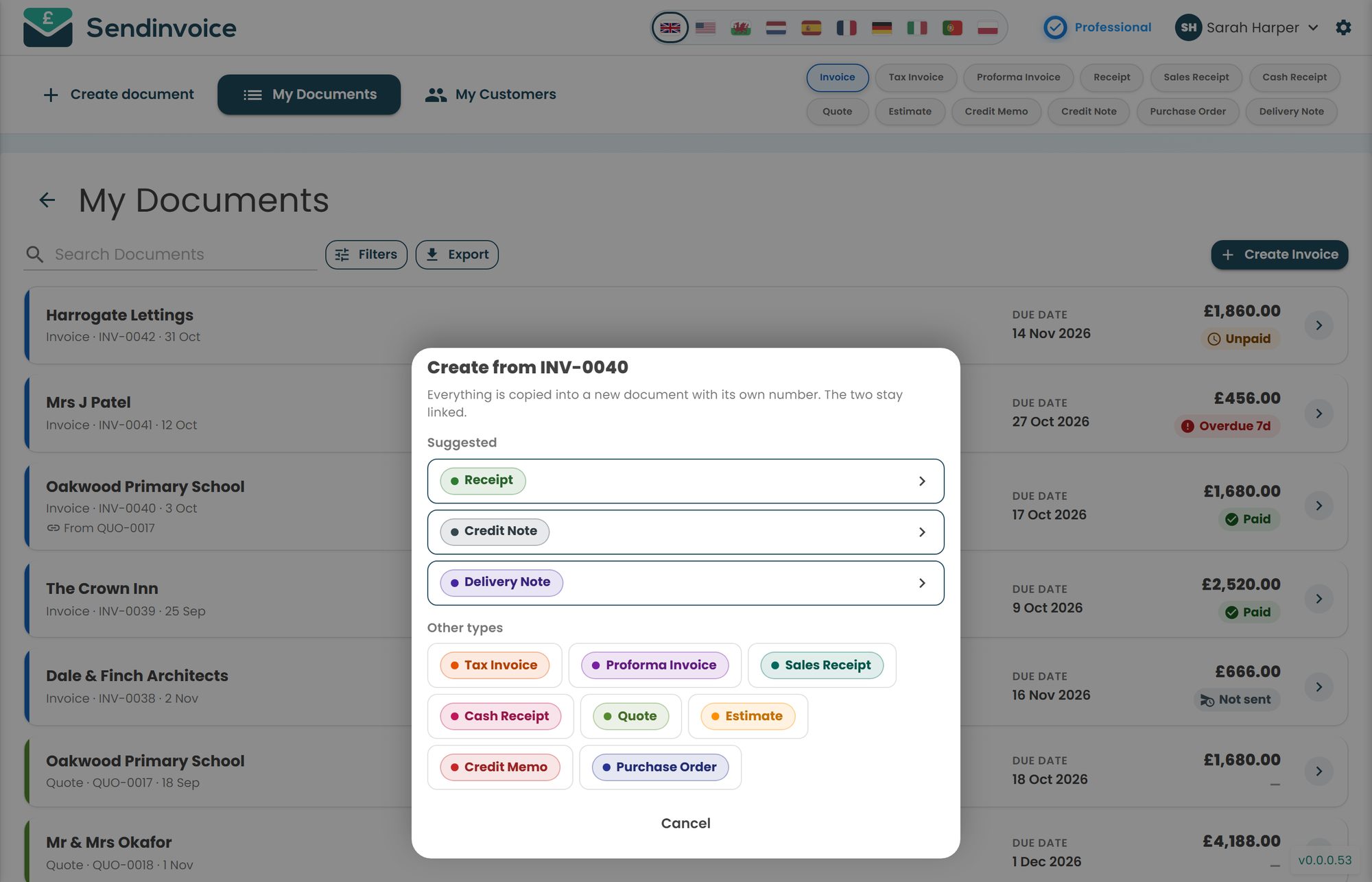
Variations: the steel, the drain and the "while you're here"
Variations are where building firms lose money and friendships. There are three kinds: things the customer asks for ("can we have bi-folds instead of French doors"), things you find ("there's a foul drain where the pad foundation goes"), and things the architect or building control change. All three follow the same rule: agree the price in writing before you do the work, and invoice it as its own line.
In writing does not mean a contract. A text saying "Hi Sam, yes go ahead with the extra steel at £1,180 plus VAT" is enough. Give each variation a number (V1, V2) and a date, and keep the texts. When the stage invoice goes out, the variation appears beneath the stage sum as a separate line, with the number and the date it was agreed. The customer sees exactly what the extension was supposed to cost, and exactly what the changes added. Never fold a variation into the stage figure; the customer will not remember the conversation, and "but the stage was supposed to be £6,800" is an argument you cannot win from memory.
The variations and extras post has the full method, including what to do when the customer wants the extra but not the price.
Worked example: a stage 3 invoice with two variations
This is Sam's invoice for the Stourbridge extension at the end of week six. Okafor Building is VAT registered, so VAT is charged at the standard rate on the whole supply. (Some new-build and conversion work qualifies for zero or reduced rates; this is an extension to an existing house, so it is standard rated. Check HMRC's notices for your own jobs.)
Okafor Building Ltd (VAT no. GB 000 0000 00)
Invoice INV-0097
Date and tax point: 14 November 2026
Bill to: Mr and Mrs R Hughes, 42 Lodge Lane, Stourbridge
Site address: as above
Contract: quote QUO-0061, accepted 22 September 2026
Due: 7 days
| Description | Qty | Unit price | Amount |
|---|---|---|---|
| Stage 3 of 6: walls to wall plate, roof structure, membrane, battens and tiles complete, extension watertight (20% of contract sum £34,000) | 1 | £6,800.00 | £6,800.00 |
| Variation V2: additional 203 UC steel beam and padstones at rear opening, required by structural engineer's revised calculation. Agreed by text 28 Oct 2026. Supply, crane hire share and installation | 1 | £1,180.00 | £1,180.00 |
| Variation V3: divert existing foul drain found under foundation line, new inspection chamber, building control inspection. Agreed by text 3 Nov 2026 | 1 | £620.00 | £620.00 |
| Net total | £8,600.00 | ||
| VAT at 20% | £1,720.00 | ||
| Total due | £10,320.00 | ||
Payment: by bank transfer to Okafor Building Ltd, sort code 00-00-00, account 00000000, reference INV-0097, or by card using the Pay button in this email.
Notes: Paid to date: Stage 1 (PRO-0019, £3,400 + VAT) and Stage 2 (INV-0088, £6,800 + VAT). Contract sum remaining after this invoice: £17,000 + VAT, plus any further agreed variations. Stage 4 (windows, doors, first fix and plaster) begins on receipt of this payment. Building control inspected foundations 9 Oct and drainage 6 Nov; both passed.
The notes do a lot of quiet work. "Paid to date" means the customer never has to add things up. "Contract sum remaining" stops the worry that the price is drifting. The building control dates are reassurance that the money is buying a house that will pass. And "Stage 4 begins on receipt" is the politest possible way of saying that the lads will not be back on Monday until the transfer is in.
Who you are invoicing: homeowner or main contractor
Sam's firm does two kinds of work and they are invoiced differently. Mixing them up is the fastest way to a tax problem.
Invoicing a homeowner
Everything above. No CIS: a private homeowner is not a CIS contractor, and nothing gets deducted from your invoice. No reverse charge: the domestic reverse charge for construction never applies to homeowners or to anyone not VAT registered. You charge VAT if you are registered, they pay the total, and your protection is the contract and the stage schedule. If they pay late, the Late Payment of Commercial Debts (Interest) Act does not apply (it covers business customers only); you can include a reasonable late payment term in your own contract and claim interest through the court at its discretion, but the stronger lever is the contract term that pauses work until the stage is paid. When a homeowner will not pay covers the ladder from reminder to small claims.
Invoicing a main contractor
When Sam's firm is a subcontractor on a larger site, the invoice changes shape. The contractor will deduct Construction Industry Scheme tax from the labour element (20% if the firm is CIS registered, 30% if not, 0% with gross payment status) and pay it to HMRC on the firm's behalf, so the invoice must show labour and materials separately, include the UTR, and show the deduction as a line with the amount payable beneath. If both businesses are VAT registered and the contractor is not an end user, the domestic reverse charge applies: no VAT is charged, and the invoice states the rate and that the customer must account for the VAT to HMRC. The contractor may also hold retention, typically 3-5%, released half at practical completion and half after the defects period; show it as a separate deduction line and keep a note of what is owed. And because this is a business-to-business construction contract, the Construction Act applies: staged payments, payment notices and the right to adjudication. The working for a main contractor post and the CIS invoice example set the wording out; check with your accountant or HMRC before changing how you invoice.
Paying your own subcontractors
If the firm is registered as a CIS contractor, it must deduct tax from its own subbies' labour, pay it to HMRC and file monthly returns. An invoicing app does not do that for you; your accountant or HMRC guidance is where to go. What helps is asking every subbie for a proper invoice with labour and materials separated and their UTR on it, and sending a purchase order for anything you are buying through them, so the paper trail starts before the first day on site.
Running it from the kitchen table
Sam's firm does not have an office. The quote is written on a laptop at night; the stage invoices are created from that quote in one tap and sent from a phone on site or at the table, with the PDF attached and a Pay button in the email. Homeowners mostly pay by bank transfer at these amounts, and the invoice is marked paid by hand when the money lands; some pay the smaller stages by card. My Documents shows every job's stages and which are Paid, Unpaid or Overdue, and the Professional plan sends the reminders so that nobody has to text the customer on a Sunday.
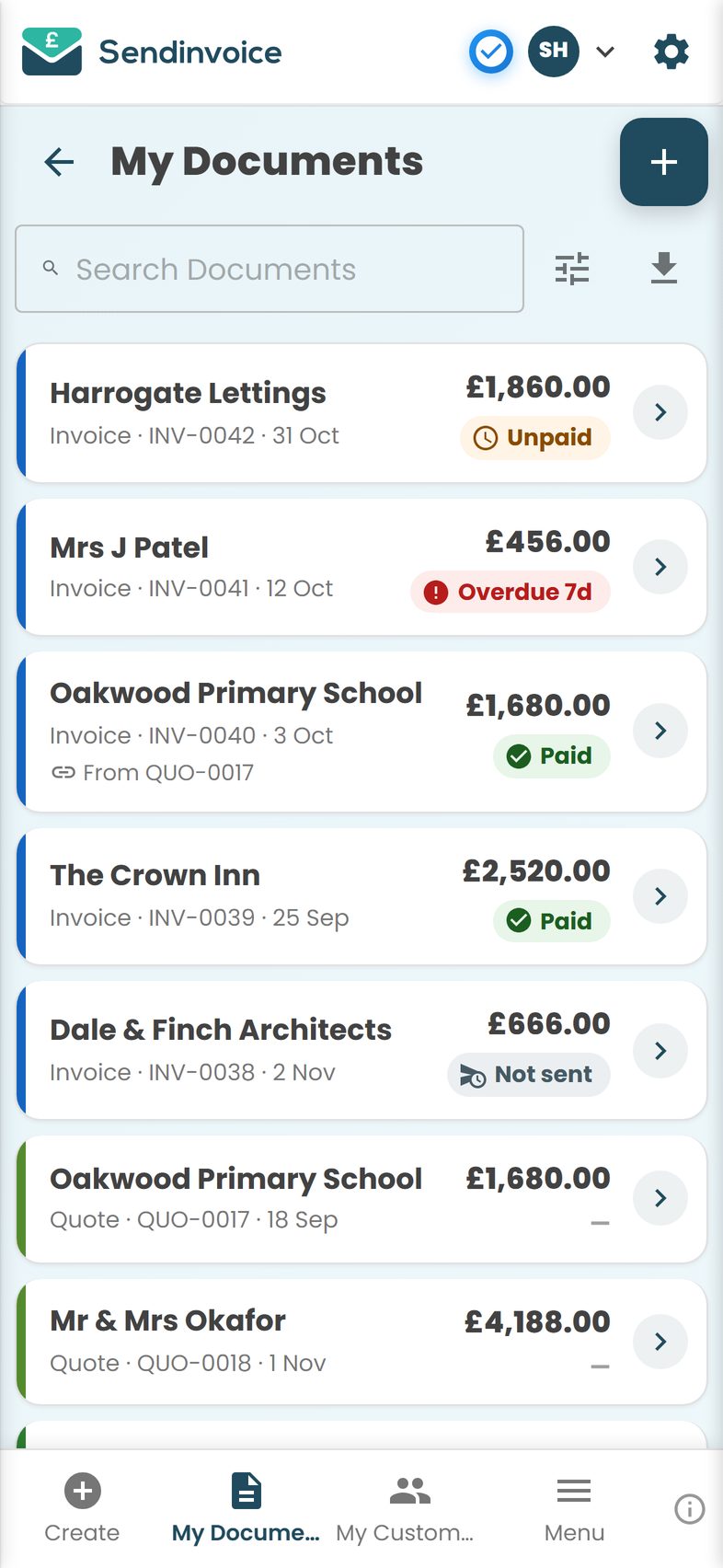
Export the list to a spreadsheet at the end of each quarter for the accountant and the VAT return. Keep invoices, variation texts, merchant receipts and bank records for at least five to six years; on a job with building control involved, keep the inspection dates with them. Making Tax Digital for Income Tax reaches sole traders with income over £50,000 from April 2026 (over £30,000 from April 2027, over £20,000 from April 2028, at the time of writing); limited companies are a different story, so check with your accountant.
Do this in SendInvoice
Quote the extension with the stage schedule on it, create each stage invoice from the quote with the variations as their own lines, and send it from site with a Pay button and the running total in the notes. Free to create and preview; £5 a month to send, remind and get paid by card.
Create a free invoice See the £5/month planFrequently asked questions
How should I split the payments on an extension?
Tie each stage to something the customer can see: deposit on signing, foundations and slab, walls to wall plate, roof on and watertight, first fix and plaster, completion. Five or six stages is typical for a single-storey extension. Put the percentages and the trigger for each stage on the quote so there is no debate about when an invoice is due.
What is a variation and how do I invoice it?
A variation is any change to the agreed job: extra work, different materials, or something you could not have known about, such as a drain where the foundations were going. Agree the price in writing before you do it (a text is fine), give it a number, and add it to the next stage invoice as its own line, with the date it was agreed. Never bury it in the stage sum.
Do I need a deposit for building work?
It is normal and sensible for anything beyond a small job. Ten to twenty per cent on signing is common for domestic extensions; nothing in law sets a maximum for consumer work. Take it against a proforma invoice, keep it accessible until you have started, and remember that a customer who cancels within 14 days of agreeing the contract in their home may be entitled to it back.
How is invoicing a main contractor different from invoicing a homeowner?
A main contractor will usually deduct CIS tax from your labour, may apply the VAT reverse charge if you are both VAT registered, may hold retention, and will expect an application for payment on their timetable. A homeowner is none of those things: you invoice the agreed stage sum, VAT included if you are registered, and they pay it. Keep the two kinds of invoice in separate mental boxes.
Can I charge interest if a homeowner pays a stage late?
Not under the Late Payment of Commercial Debts (Interest) Act, which only covers business customers. You can claim interest in a county court claim at the court's discretion, and you can include a reasonable late payment term in your own contract. The more practical lever on a domestic job is the contract itself: say that work pauses if a stage payment is overdue, and mean it.
Should a builder be VAT registered?
You must register once your taxable turnover passes the threshold, and most building firms with employees get there quickly because materials pass through your books. Once registered, VAT applies to the whole supply, labour and materials, usually at the standard rate; some new-build and conversion work qualifies for zero or reduced rates. Check with your accountant before relying on any of them.