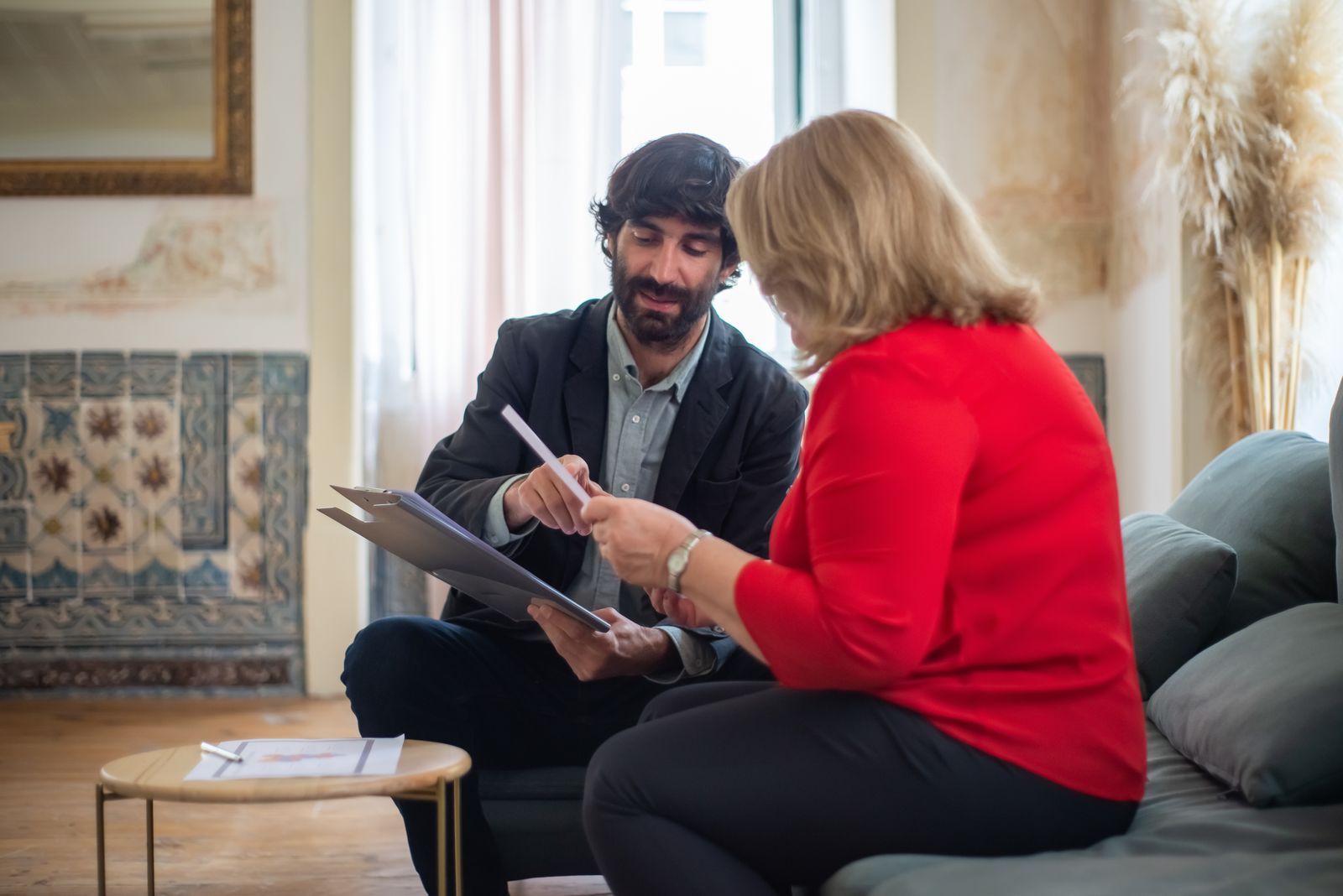
You did the work. You sent the invoice. The due date came and went, and now there is a small, heavy feeling every time you open your banking app. Chasing money is the part of running a one-person business nobody warns you about. The good news: it is a solved problem, with a script, and most of it can be automated.
Why chasing feels so bad (and why it should not)
Ask any sole trader what they hate most about the job and it is rarely the work. It is the awkward email to a nice customer who has not paid. You worry about sounding desperate, or rude, so you wait another week. Then another. And the longer you wait, the stranger the email feels to write.
Here is the reframe: a payment reminder is not an accusation. It is admin. Big companies send them automatically without a flicker of embarrassment. Most late payments are not a customer refusing to pay; they are a customer who meant to, got distracted by a school run and a broken boiler, and forgot. A polite nudge is a favour to them as much as to you.
So the aim is not to be tough. It is to be consistent: the same calm sequence, every time, for every customer, so it never feels personal.
The four-step escalation ladder
This is the whole method. Four messages, each a little firmer than the last, on a fixed schedule. Copy the templates straight into an email or a text and swap in your own name and figures. The example throughout is a £680 invoice for a bathroom retile, sent by Priya, due on the 1st of the month.
Step 1: the friendly nudge (on the due date)
Send this the day the invoice falls due, or the morning after. Assume good faith, and make paying easy by including the amount, the invoice number and a way to pay in the message itself.
Subject: Invoice INV-0042 is due today
Hi Tom,
Just a quick note to say invoice INV-0042 for £680.00 (the bathroom retile) is due today. If you have already sent it, thank you and please ignore this.
You can pay by card using the Pay button below, or by bank transfer to the details on the invoice.
Thanks again for the work, and let me know if you have any questions.
Priya
Text version, if that is how you and the customer usually talk: "Hi Tom, Priya here. Invoice INV-0042 (£680) is due today. Pay link is in the email I sent. Thanks!"
Step 2: the firm reminder (7 days overdue)
Still warm, but now you name the fact that it is late and ask for a date. "When can I expect payment?" is hard to ignore and easy to answer.
Subject: Overdue: invoice INV-0042 (£680.00)
Hi Tom,
I have not yet received payment for invoice INV-0042 for £680.00, which was due on 1 November. I have attached it again in case the original went astray.
Could you let me know when I can expect payment? If there is a problem with the invoice, or anything you would like to discuss, just reply and we can sort it out.
Thanks,
Priya
Step 3: the formal notice (14 days overdue)
Now the tone changes from "friend" to "business". State the facts, give a short deadline, and mention your right to charge statutory interest and compensation. Mentioning it is usually enough; you do not have to add it yet.
Subject: Formal reminder: invoice INV-0042 now 14 days overdue
Dear Tom,
Invoice INV-0042 for £680.00, dated 2 October and due on 1 November, remains unpaid and is now 14 days overdue. I have sent two previous reminders.
Please arrange payment within 7 days, by 22 November. You can pay by card using the link below or by bank transfer.
Please note that under the Late Payment of Commercial Debts (Interest) Act 1998 I am entitled to charge statutory interest at 8% above the Bank of England base rate, plus fixed compensation of £40, on overdue business invoices. I would much rather not, so I would be grateful if you could settle the invoice now.
Kind regards,
Priya Shah
Shah Tiling
Step 4: the final notice (21 to 28 days overdue)
The last letter before you take it out of your own hands: short, unemotional and specific about what happens next. Send it by email and, if the amount justifies it, by post too.
Subject: Final notice before further action: invoice INV-0042
Dear Tom,
Despite my reminders of 1, 8 and 15 November, invoice INV-0042 for £680.00 remains unpaid.
Unless full payment is received by 29 November, I will add statutory interest and compensation under the Late Payment of Commercial Debts (Interest) Act 1998 and begin a claim through the county court without further notice. Any court fees would be added to the amount owed.
If you are having difficulty paying, please contact me before that date so we can agree a plan.
Yours sincerely,
Priya Shah
Shah Tiling
Notice the last line. Offering a way out keeps the door open for a customer who is genuinely struggling.
What UK law lets you charge
If your customer is another business, you have more muscle than you might think. The Late Payment of Commercial Debts (Interest) Act 1998 applies automatically to UK business-to-business contracts, whether or not the invoice mentions it. At the time of writing it gives you:
- Statutory interest at 8% per year above the Bank of England base rate, calculated daily from the day after the due date.
- Fixed compensation for the cost of chasing: £40 for a debt under £1,000; £70 for £1,000 to £9,999.99; £100 for £10,000 or more. This is per invoice.
On Priya's £680 invoice, with a base rate of (say) 4%, that is 12% a year, or about 22p a day. After 30 days overdue she could add roughly £6.70 in interest plus the £40 compensation. The interest is small; the compensation, and the fact that you know your rights, are what make customers move.
If no payment term was agreed, the law treats the invoice as due 30 days after the customer receives it (or the goods or services, if later). To be paid faster, put the term on the invoice; our payment terms guide covers how.
For consumers, none of this applies automatically. You can only charge a late fee if your terms said so up front and the fee is reasonable. Keep the rest of the ladder the same; just leave out the interest paragraph.
When to stop chasing and hand it over
At some point the cost of your time outweighs the money. If the four messages have had no reply, or promises that keep evaporating, you have three sensible options:
- A phone call. One short, friendly call: "Hi Tom, Priya. Just ringing about that invoice; is everything OK?" It is amazing how often this works when four emails did not.
- Mediation. Cheaper and quicker than court, and often enough to prompt payment on its own. The Small Business Commissioner can also help with complaints against larger businesses.
- Small claims. In England and Wales, debts up to £10,000 go through the small claims track, and you can start a claim through Money Claim Online. There is a court fee, which you add to the claim, and the process is designed for people without a solicitor. Scotland and Northern Ireland have their own equivalents.
Fees, limits and processes change, so check the current guidance on GOV.UK before you start, and consider whether the customer can actually pay. A judgment against a company with no money is an expensive piece of paper.
Let the software do the chasing
Everything above works. It also takes a diary, a template folder and a spine of steel on a Tuesday evening. Most sole traders do not chase consistently, because it is dull and slightly uncomfortable, and so invoices drift. The fix is to take yourself out of the loop.
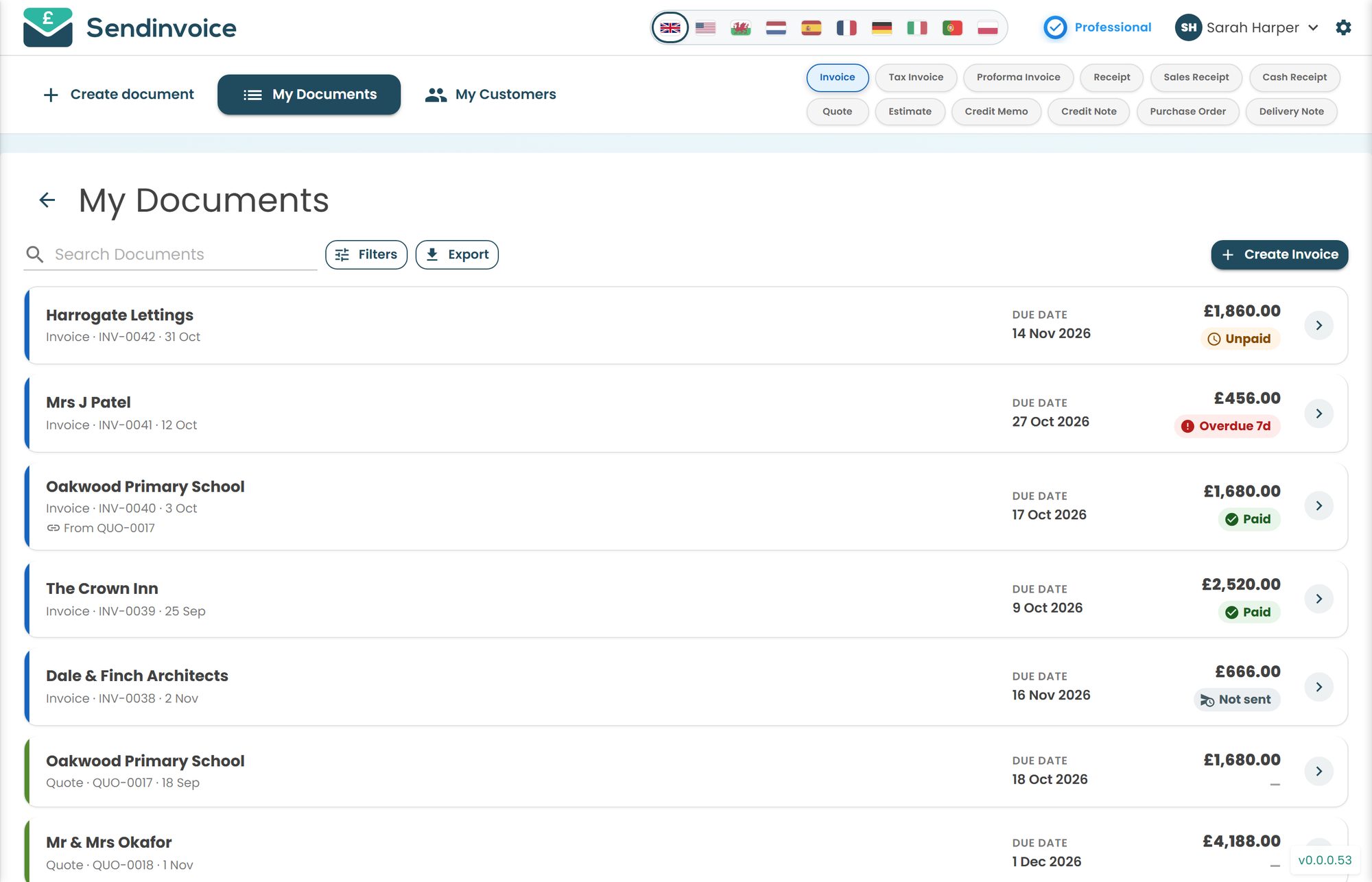
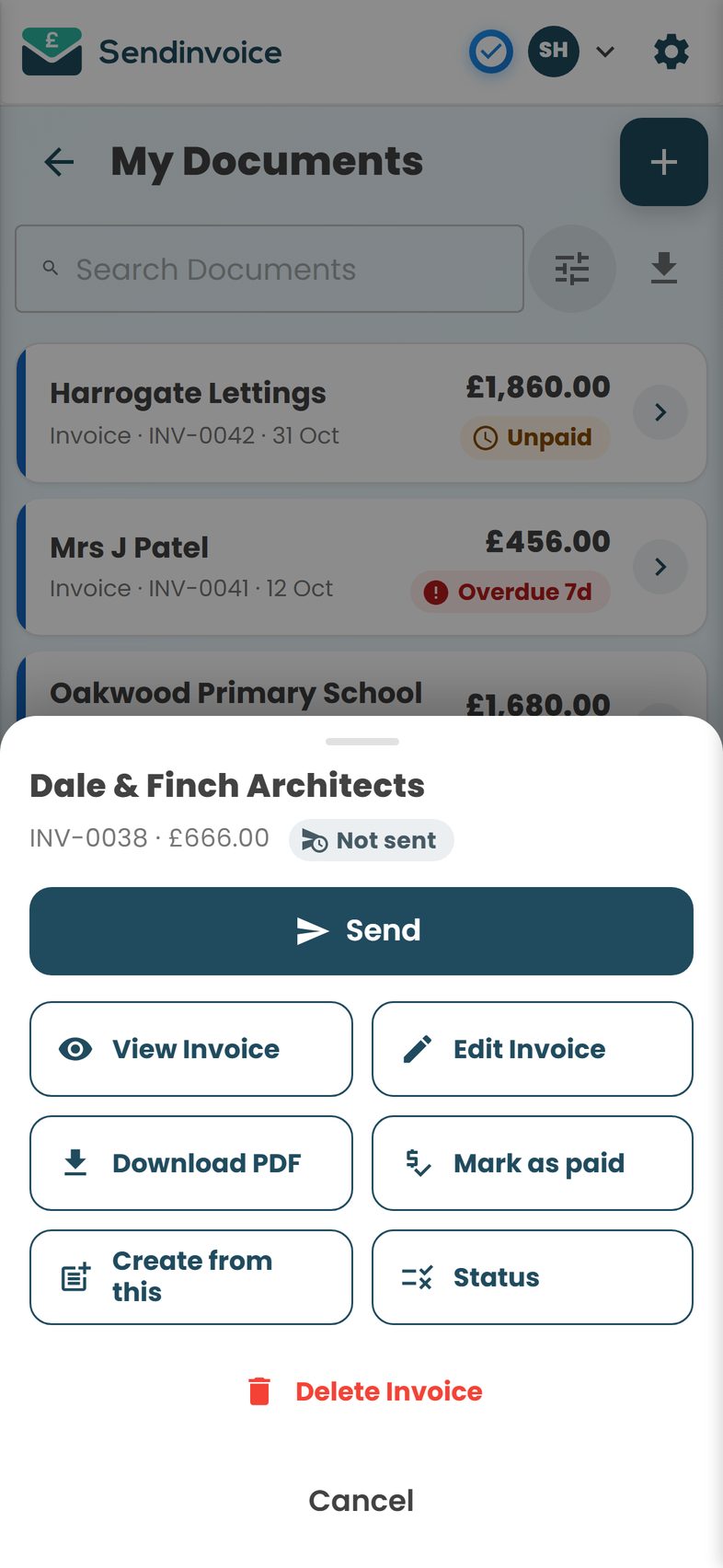
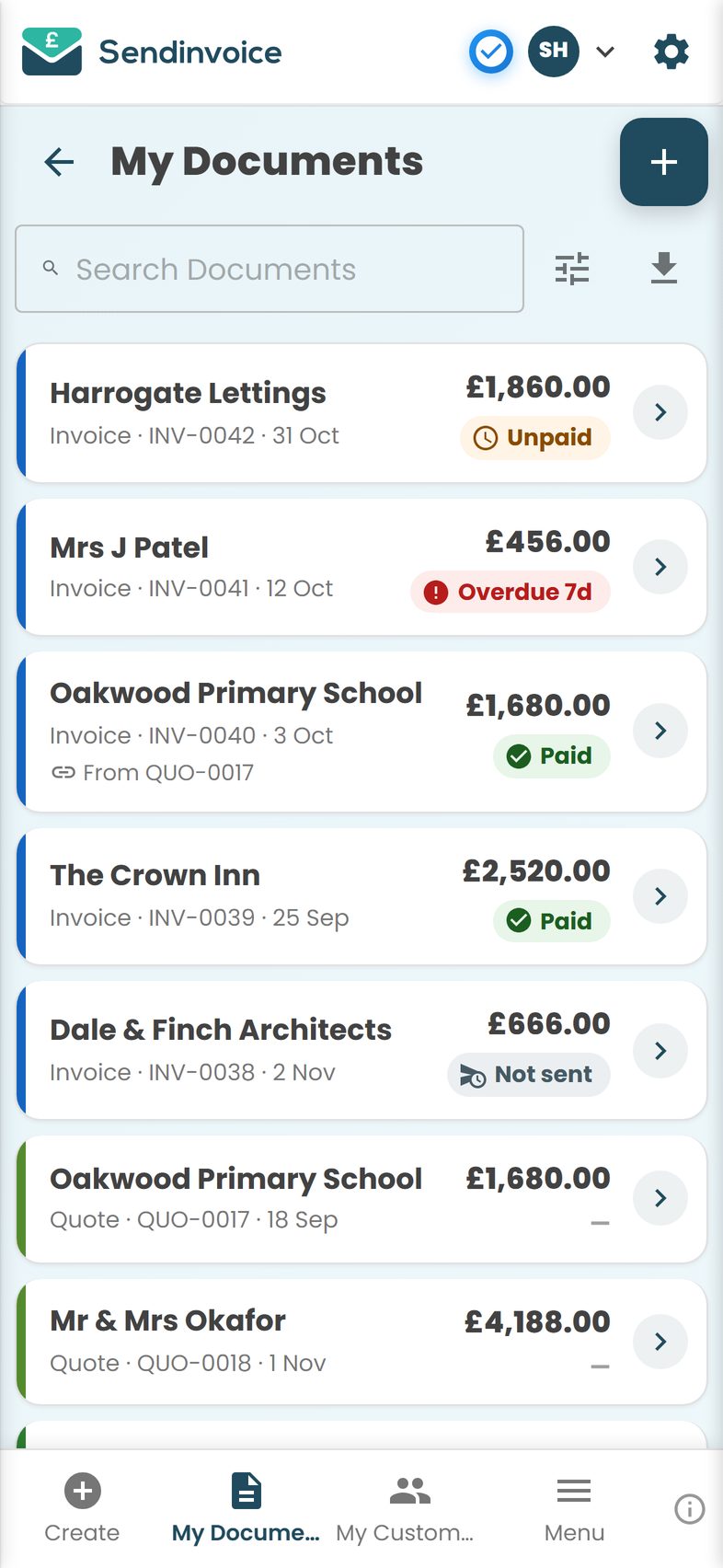
In SendInvoice, every invoice email and PDF carries a Pay button. The customer taps it, pays by card through Stripe, and the invoice flips to Paid on its own with a green tick in My Documents. For invoices that stay unpaid, the Professional plan sends escalating reminders for you: friendly first, firmer after, each with the Pay button in it. You can also send a reminder yourself from a document's action sheet on your phone while you are still on site.
Two habits pull it all together:
- Check Paid / Unpaid / Overdue once a day. Thirty seconds with a coffee. The red badges are your to-do list, in the van or at the kitchen table.
- Send the invoice while you are still with the customer. A customer who has just admired their new bathroom pays on the spot far more often than one who gets a PDF a fortnight later.
Bigger jobs deserve a deposit up front on a proforma invoice, and a quote first means the price is agreed before the work starts, which removes the most common excuse for not paying.
Every template above is polite, even the last one. That is deliberate. Firm and polite beats angry every time: it gets paid sooner, it keeps the customers worth keeping, and it reads well if things ever go to court. Say what is owed, say when you need it, say what happens next. Then let the system send the next one.
Do this in SendInvoice
Put a Pay button on every invoice, see Overdue in red before you have finished your coffee, and let escalating reminders send the awkward emails for you. Free to create and preview; £5 a month to send, remind and get paid by card.
Create a free invoice See the £5/month planFrequently asked questions
How long should I wait before chasing an unpaid invoice?
Send a friendly reminder on the due date itself, or the day after. Waiting weeks makes the conversation harder, not easier, and most late payments are simple forgetfulness that a quick nudge fixes.
Can I charge interest on a late invoice in the UK?
Yes, if the customer is a business. The Late Payment of Commercial Debts (Interest) Act 1998 lets you charge statutory interest at 8% plus the Bank of England base rate, and a fixed compensation sum of £40, £70 or £100 depending on the debt size. For consumers, you can only charge what your agreed terms say.
What payment term applies if we never agreed one?
For business-to-business work in the UK, the law treats payment as due 30 days after the customer receives your invoice or the goods or services, whichever is later, when nothing else was agreed.
Should I phone or email a late-paying customer?
Email first, because it leaves a record and is easy to act on. If two written reminders get no reply, a short, friendly phone call often resolves it in two minutes. Follow the call up with an email confirming what was agreed.
Will chasing damage the relationship?
Rarely, if you are polite and factual. Good customers expect to be reminded and are often embarrassed they forgot. The customers who react badly to a courteous reminder are usually the ones you do not want to keep.
What if the customer disputes the invoice?
Stop the escalation ladder and deal with the dispute first. Ask exactly what they disagree with, fix anything that is genuinely your error with a credit note and a fresh invoice, and ask them to pay the undisputed part straight away.
How do I take it further if they still do not pay?
For debts up to £10,000 in England and Wales you can use the small claims track through Money Claim Online. Consider mediation first, and check the current guidance on GOV.UK before starting, as fees and limits change.
Can software chase invoices for me?
Mostly, yes. SendInvoice's Professional plan sends escalating payment reminders that start friendly and get firmer, each with a Pay button, and marks the invoice Paid automatically when the card payment goes through.