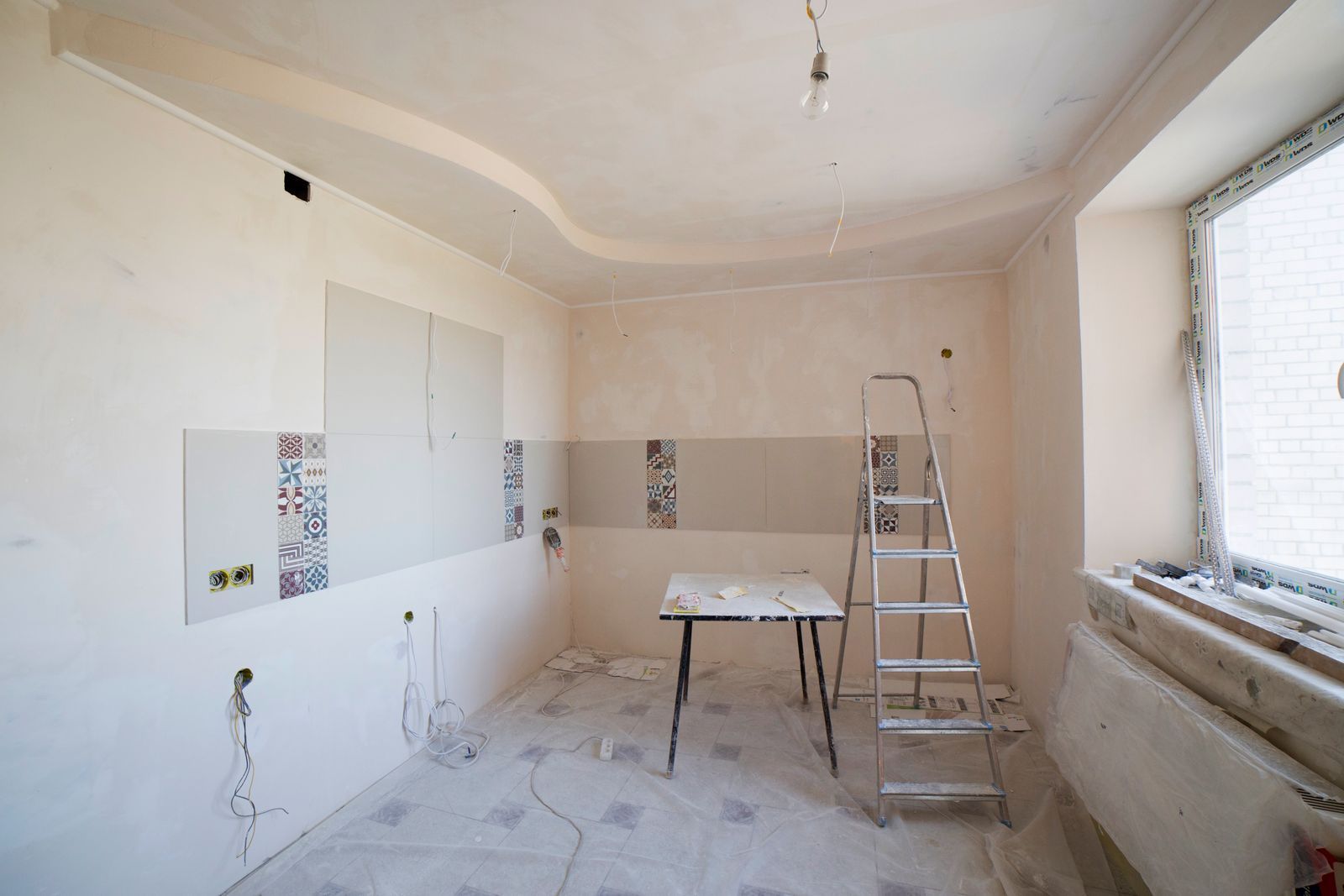
Gareth is a painter and decorator in Swansea. He is standing in a hallway, stairs and landing in a 1920s terrace looking at three layers of woodchip, a cracked ceiling and a customer who wants a price. He could say £1,150 fixed and pray about what is under the paper. He could say £220 a day and watch her face fall because she cannot budget for "a day, maybe five". Twenty years in, he knows the honest answer is a bit of both, and he knows how to put that on a quote and then on an invoice so nobody feels caught out.
The two models, plainly
Day rate: you charge for your time, usually by the day or half day, plus materials. The customer carries the risk of the job taking longer. You are paid for every hour you work, and no more.
Fixed price: you quote a single figure for a defined scope. You carry the risk of it taking longer. If you are quick, you earn more per hour; if you hit woodchip over blown plaster, you earn less.
Most of the arguments tradespeople have with customers come from mixing the two up without saying so: pricing a job "about £1,100" in the customer's head and "£220 a day, probably five" in yours. The fix is not to pick one model forever. It is to choose deliberately for each job and write it down.
When a day rate works
- The scope is genuinely unknown. Stripping paper, opening up a floor, chasing a leak, "see what you can do with the garden". You cannot price what you cannot see.
- The customer wants to control the scope. Some customers like to say "do the hallway first, then we'll see". A day rate lets them stop whenever they like without an argument about a fixed price for half a job.
- You are working for another trade or a builder. Most subcontract labour is day rate or price-per-unit, and the builder expects a daily figure. If you are under the Construction Industry Scheme, remember the deduction applies to the labour line; the CIS invoice example covers it.
- Small jobs. Half a day of odd jobs does not need a quote with exclusions. Hourly or half-day rates and a clear invoice are enough.
The weakness of a day rate is that the customer has no ceiling, and a nervous customer with no ceiling becomes a customer who stands behind you asking why you are having a brew. Two things fix that: give a best-guess number of days up front, and send a two-line text at the end of each day saying what you did and how many days are used.
When a fixed price works
- The scope is clear and you have done it fifty times. Two coats on four walls and a ceiling in a freshly plastered room is a known quantity. Price it, and be rewarded for being good at it.
- The customer is comparing quotes. Homeowners choose between tradespeople on price far more than on rate. "£1,150 for the hallway, stairs and landing" is a thing they can say yes to. "£220 a day" is a thing they have to think about.
- You are fast. If you consistently finish in four days what others take five to do, a fixed price pays you for it. A day rate pays you less for being better.
- Bigger jobs with deposits and stages. You cannot sensibly take a 30% deposit against "some days". A fixed price gives you something to take a percentage of; see deposits and staged payments.
The weakness of a fixed price is scope creep: the "while you're here" that turns four days into six with no change to the number. More on that below, because it is where most of the money leaks.
The hybrid most experienced trades use
Gareth's answer to the woodchip is this. Fixed price for everything he can see and define: prep after stripping, two coats to walls and ceilings, woodwork undercoat and gloss, £980. Day rate for the one thing he cannot see: stripping the paper and making good whatever is under it, £220 a day, estimated one to two days. The customer gets a firm number for most of the job, and a clearly fenced-off bit of uncertainty with a best guess attached.
Other versions of the same idea:
- A provisional sum on a fixed-price quote: "Allow £150 for repairs to ceiling; actual cost to be agreed once exposed."
- Day rate to open up, then a fixed price. One paid day to strip and inspect, then a firm quote for the rest. Common for roofs, floors and anything behind plasterboard.
- A fixed price with written exclusions: "Price excludes repairs to plaster beyond minor filling; any such work to be quoted separately before proceeding."
The common thread: the uncertain part is named, fenced and priced per unit before you start, so when it happens nobody is surprised.
How each looks on the quote
A fixed price belongs on a quote: a firm offer, with a scope, exclusions, a validity period and payment terms. A day rate belongs on an estimate, because the final figure is by nature a guess, and calling it a quote invites the customer to treat your best guess as a ceiling. The quote, estimate or invoice post explains the difference in law and in practice.
A day-rate estimate needs four things most people leave off:
- What a day is. "8 hours on site, 8am to 4.30pm with half an hour for lunch." Otherwise a day means whatever the customer decides it means.
- Whether materials are included. Almost always no; say so, and say how they are charged.
- A best-guess number of days, or a range, and the words "final invoice based on days actually worked".
- What happens if it runs over: "I will let you know by text if the job looks likely to exceed the estimate before continuing."
A fixed-price quote needs the scope in enough detail that an extra is obviously an extra: rooms, surfaces, number of coats, what is being filled and what is not, who moves the furniture, who disposes of the waste. How to write a trade quote goes through the full list.
How each looks on the invoice
Fixed price: one line for the agreed work, referencing the quote number, then any agreed variations as separate lines, then materials if they were excluded from the price, then any deposit deducted. The customer can lay the invoice next to the quote and see the numbers match.
Day rate: a labour line showing the number of days (half days as 0.5) and the rate, with the dates worked in the description; then materials on their own lines, itemised where the customer would recognise them and bundled as sundries where not. The labour and materials post covers the layout. If the days ran over the estimate, a short note saying why, with a reference to the text where the customer agreed it.
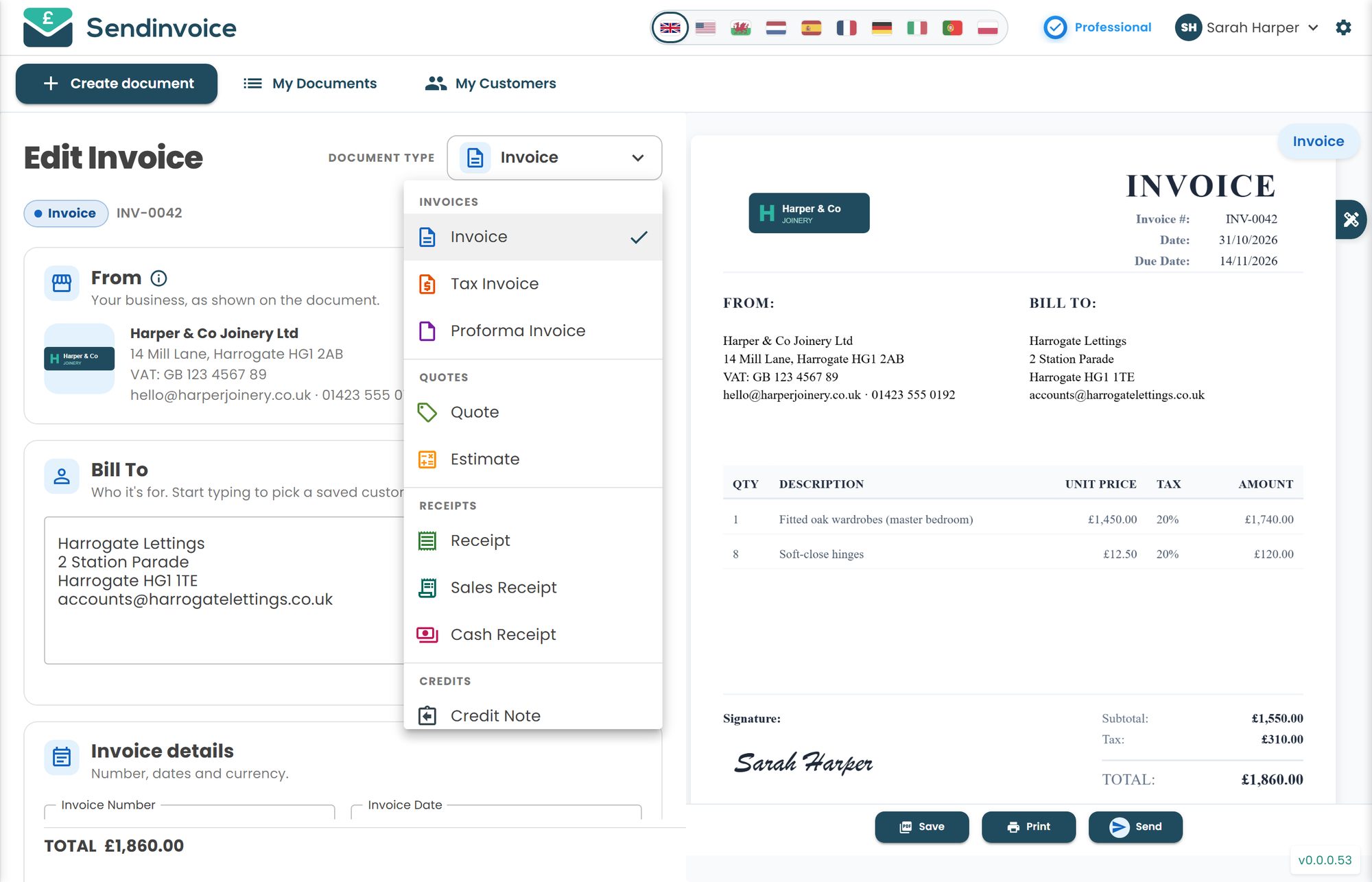
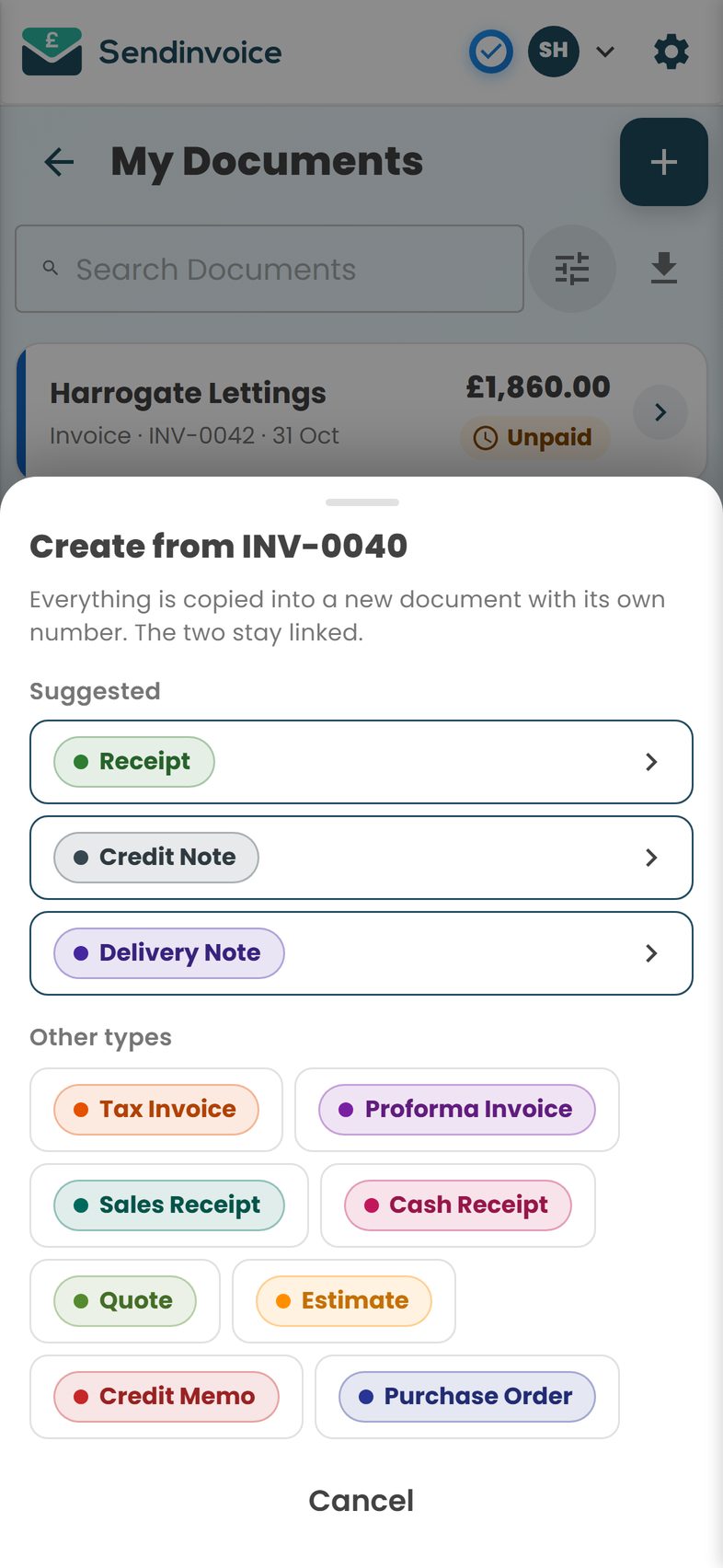
In both cases, SendInvoice can create the invoice from the quote or estimate in one tap, so the customer details and the description carry over and the invoice shows "From QUO-0203" or "From EST-0045". For a day-rate job you then change the quantity to the days actually worked; for a fixed price you add the variation lines.
Worked example: Gareth's hallway, invoiced
Gareth is a sole trader and not VAT registered, so there is no VAT anywhere on this. The stripping took a day and a half, which he told the customer by text at the end of day one ("Three layers and some loose plaster behind the bottom one. Looks like a day and a half for stripping and making good, not one. OK?" "Fine, thanks for letting me know.").
Invoice INV-0157 from G. Rees Decorating to Mrs L. Hughes, 9 Mansel Street, Swansea. Date 24 October 2026. From EST-0045 / QUO-0203. Payment due within 7 days.
| Description | Qty | Unit | Amount |
|---|---|---|---|
| Day rate: strip three layers of woodchip from hall, stairs and landing walls, make good loose and blown plaster, fill and sand. Worked 20 Oct (full day) and 21 Oct (morning). Agreed by text 20 Oct. | 1.5 days | £220.00 | £330.00 |
| Fixed price as per QUO-0203: prep, mist coat where required, two coats matt emulsion to walls and ceilings of hall, stairs and landing; undercoat and gloss to skirting, architraves, doors and handrail. Completed 24 Oct. | 1 | £980.00 | £980.00 |
| Trade matt emulsion, 2 x 10L, colour as chosen | 2 | £58.00 | £116.00 |
| Trade undercoat and gloss, 2.5L each | 1 | £52.00 | £52.00 |
| Lining paper, 1400 grade, 4 rolls | 4 | £9.00 | £36.00 |
| Filler, caulk, sandpaper, masking and sundries | 1 | £24.00 | £24.00 |
| Total due | £1,538.00 | ||
Notes: Not VAT registered. Day rate based on 8 hours on site as per estimate EST-0045. Pay by card using the link in this email or by bank transfer to the details below.
Mrs Hughes was told £980 fixed plus one to two days at £220 plus materials. She got exactly that, with the day-and-a-half agreed on the day it happened. There is nothing on the invoice she has not already seen.
Protecting yourself from scope creep
Scope creep is the quiet killer of fixed prices and the quiet irritant of day rates. On a fixed price, every "could you just" is unpaid. On a day rate, every "could you just" is paid but lands on the invoice as a surprise. The defence is the same for both.
- Write the scope down before you start, in enough detail that extras are visible as extras. "Walls and ceiling" means the customer will assume the woodwork is in. "Walls and ceiling; woodwork excluded" does not.
- When something is asked for, stop and price it. Not in your head. Out loud or by text: "The cupboard doors would be another half day, £110. Want me to?" Then wait for the yes. Invoicing variations and extras has the exact habit.
- On a day rate, report daily. A two-line text at 4.30pm: "Day 2 done. Stripping finished, started filling. On track for 5 days." It takes 20 seconds and makes the final invoice unarguable.
- On a fixed price, protect the number with exclusions, not vagueness. A tight scope with a list of what is not included is friendlier than a vague scope you then have to defend.
- Price the hidden stuff per unit before you find it. "Plaster repairs beyond minor filling at £220 per day, agreed before proceeding." Then when the plaster comes off with the paper, the price is already agreed.
So which should you use
If you have to pick a default: fixed price for domestic customers on work you can see and have done before; day rate for other trades, for investigation, and for the part of any job you cannot define. Say which you are using on every quote or estimate, define what a day is, and invoice with the days and the dates on the line. The model matters less than the clarity.
And whichever you choose, invoice on the last day, from the hallway, before the dust sheets are back in the van. Everything else about getting a decorating invoice paid is in how to invoice as a painter and decorator.
Do this in SendInvoice
Send a quote for the fixed price or an estimate for the day rate, then turn it into the invoice in one tap with the days and materials on their own lines and a Pay button in the email. Free to create and preview; £5 a month to send and get paid by card from the job.
Create a free invoice See the £5/month planFrequently asked questions
Is a day rate or a fixed price better for a tradesperson?
Neither is better in general. A day rate protects you when the scope is uncertain, such as stripping old wallpaper or opening up a ceiling. A fixed price rewards you for being quick and gives the customer certainty, which wins more domestic work. Many experienced trades use a fixed price for the defined work and a day rate for anything that turns up once they start.
What should a day rate include?
Say exactly what a day is: the hours on site, whether travel is included, and whether materials are extra. A typical line on a quote reads: day rate £220, based on an 8-hour day on site, materials charged separately at cost plus handling. Without that, a customer may assume a day runs until the job is done and that the paint is included.
How do I invoice a day-rate job?
One line for the labour showing the number of days (or half days) and the rate, with the dates worked in the description, then materials on their own lines. If the job ran over the estimate, say why in the notes, and refer back to any text where the customer agreed the extra time. Send a brief end-of-day message during the job so the invoice never surprises anyone.
What if a fixed-price job takes longer than I thought?
If the delay is because the job was harder than you reasonably expected, that is the risk you took when you priced it, and you absorb it. If it is because the customer added work or something hidden came to light that no one could have seen, that is a variation: stop, price it, get a yes in writing, and add it to the invoice as its own line.
Should I use a quote or an estimate for day-rate work?
An estimate. A quote is a fixed offer, and a day-rate job is by its nature an informed guess at the number of days. Head the document Estimate, give a range of days or a best guess with the rate, and say clearly that the final invoice will be based on days actually worked. For fixed-price work, use a quote.
Can I switch from day rate to fixed price partway through a job?
Yes, by agreement. A common pattern is a day or two on day rate to open up and find out what you are dealing with, then a fixed price for the rest once the scope is clear. Put the switch in writing, even as a text, with the fixed price and what it covers, so the two parts of the job are invoiced cleanly.