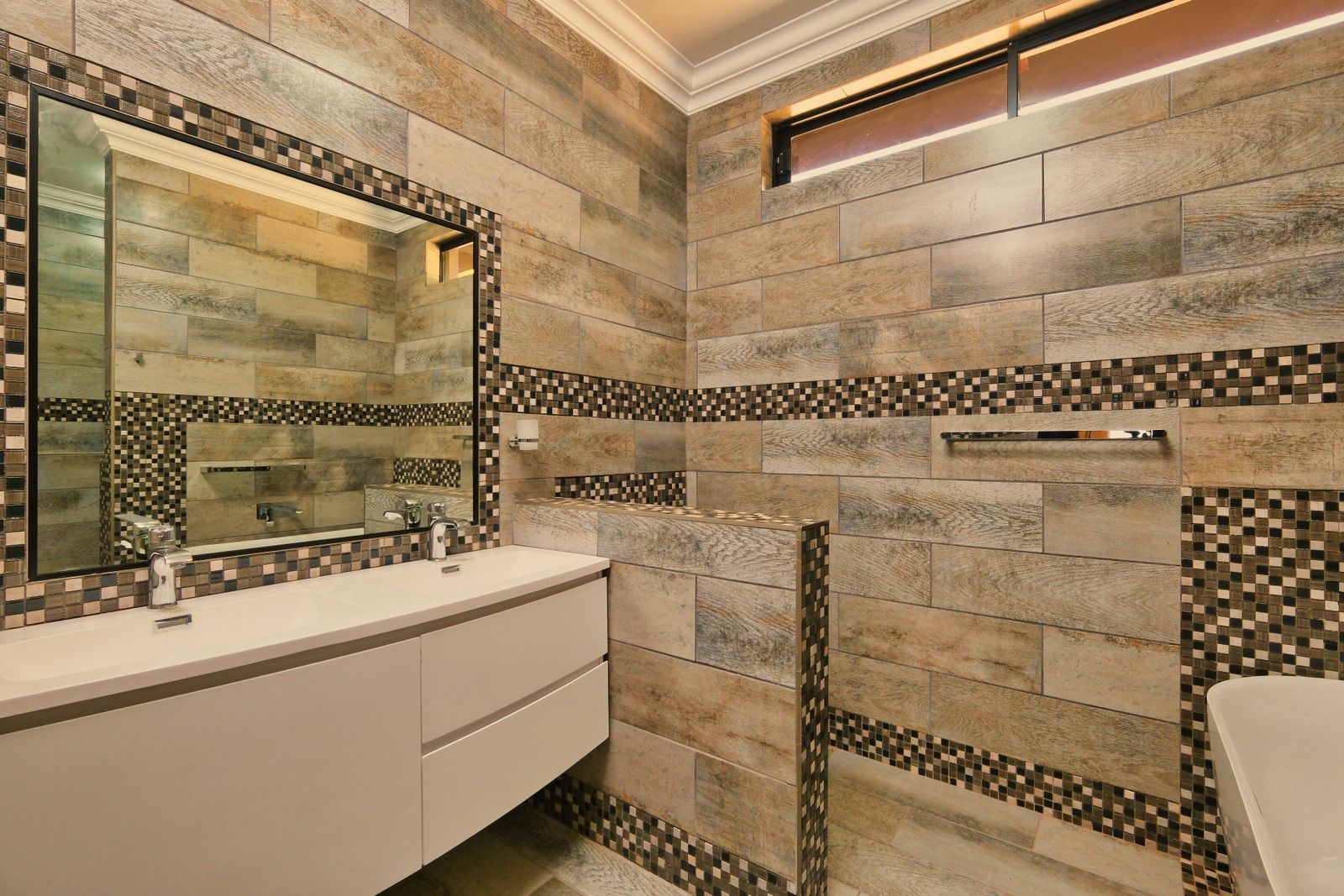
Jade is on her knees in a Bristol bathroom pressing the last piece of anthracite grout into the shower corner. The customers bought the tiles themselves, from a warehouse in Avonmouth, after a long weekend of samples. Jade supplied everything else: tanking, adhesive, grout, trims. The job comes to £1,262, and the customer has already asked, cheerfully, "so what do I owe you, just the labour?". That question is the whole art of invoicing as a tiler: showing the labour per square metre, the materials you supplied and the tiles you did not, so clearly that nobody asks it twice.
Pricing per square metre
Tiling is sold by the square metre, and customers know it. That is useful, because it means your invoice can show its working. What catches new tilers out is that one rate does not fit every surface. The rate depends on:
- The tile. Large-format porcelain needs a flat substrate, a big trowel and two hands; mosaics and small metros mean many more grout lines; natural stone needs sealing. All slower than 300 x 600 ceramic straight-set.
- The pattern. Herringbone, diagonal and brick bond add cuts. Quote a higher rate or a pattern surcharge, and say which.
- The surface. Floors with a lot of cuts round pipes and a WC, niches, window reveals and boxing all take time that a flat wall does not.
- The room. A downstairs loo is slower per m² than a wet room because you cannot get into it.
So measure each surface, write it down, and quote with the area and the rate for each: "Floor, 600 x 600 porcelain, 4 m² at £45; walls, 300 x 600 ceramic, 22 m² at £38." Carry exactly those lines to the invoice. If the customer later wonders why the floor rate is higher, the description already explains it. There is more on a quote that protects you in how to write a quote for a trade job.
For odd jobs (a splashback, a hearth, re-grouting a shower) a half-day or day rate is simpler and fairer. Put the time on the invoice: "Labour, half day" with what it covered.
When the customer supplies the tiles
Half of domestic tiling jobs come with the tiles already stacked in the hall. This is normal, and it is a trap unless the paperwork handles it. Three things to put in writing, on the quote and then on the invoice:
- Quantity is the customer's responsibility. Tell them the area and advise a 10% wastage allowance (15% for diagonal or herringbone). If they run out, the second visit and the wait for the next batch are chargeable, and the quote should say so.
- Quality and shade are checked before fixing, not after. Open the boxes together, check batch numbers and shades, look for chips and bowing. Once a tile is on the wall, it is very hard to prove it arrived crazed.
- What "tiles" means. Customers often assume the tiles come with trims, spacers and the right adhesive. They do not. Your quote lists what you supply; anything not on it is theirs to provide or yours to invoice.
On the invoice, there is no tile line, because you did not sell them any. Instead a short note does the work: "Tiles supplied by customer. Inspected for shade and damage before fixing. One unopened box returned to customer." Clean, factual, and the record you want if a tile cracks in a year.
Adhesive, grout, tanking and trims
This is where tilers either get paid properly or quietly subsidise the customer. On a bathroom the sundries are real money: flexible adhesive for porcelain, a tanking kit for the shower area, epoxy or anti-mould grout, chrome or aluminium trims, silicone, levelling clips, sealer for stone. Build them into your rate and your labour looks expensive while your margin disappears. List them as materials and customers accept them without a murmur, because they can see what the money bought.
A clear way to lay it out:
- Labour lines per surface, with area and rate.
- Materials lines with quantities: "Flexible adhesive, 6 x 20 kg", "Grout, anthracite, 2 x 5 kg", "Tanking kit, shower enclosure". A modest markup on materials is normal; you bought them, carried them and are responsible for them. The detail on markup and receipts is in labour and materials on an invoice.
- Preparation as its own lines if it was agreed: boarding, priming, levelling compound.
If you are VAT registered, VAT applies to the whole supply, labour and materials, at the standard rate. If you are not, as most one-person tiling businesses are not, you show no VAT at all; see invoicing when you are not VAT registered.
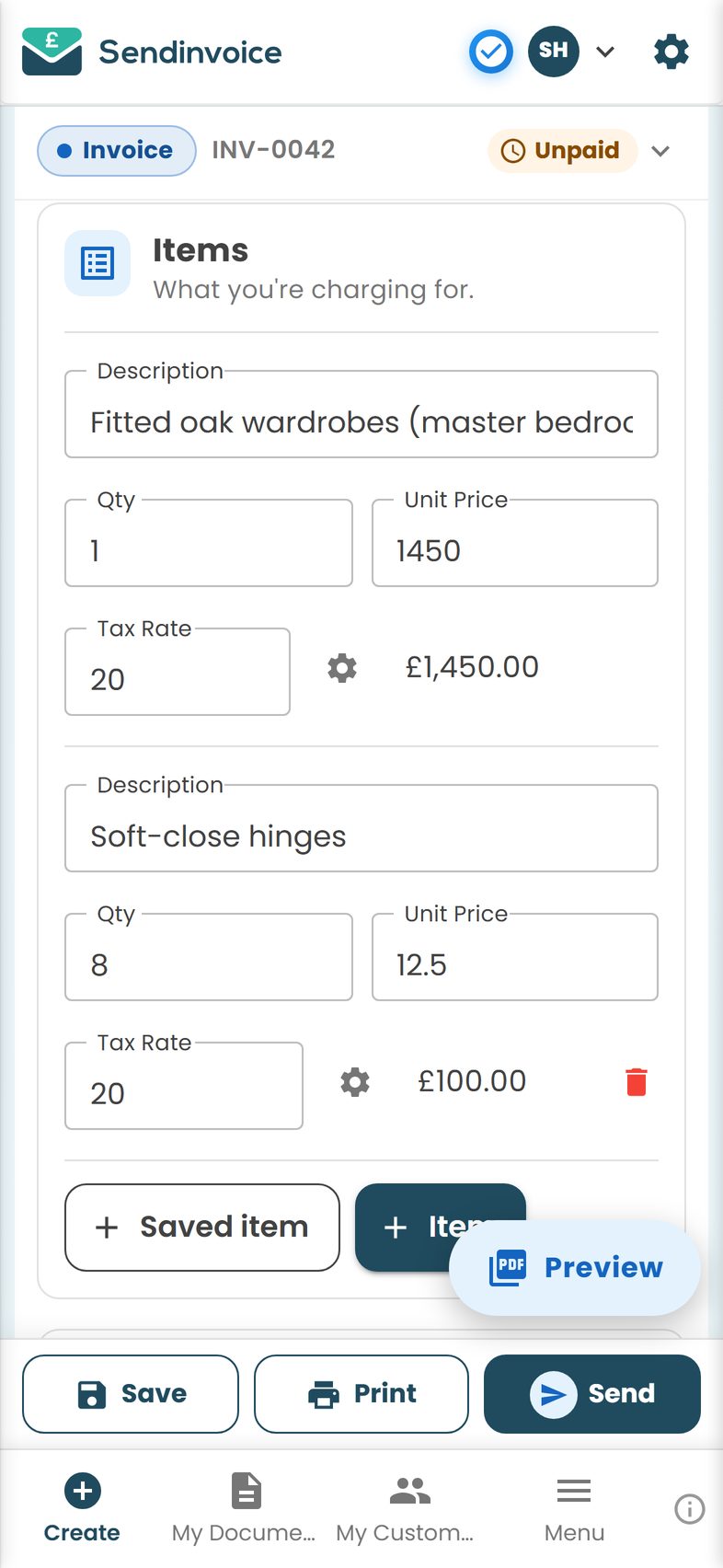
Worked example: a family bathroom
Here is Jade's invoice for the Bristol bathroom. She is a sole trader, not VAT registered, so there is no VAT on it anywhere. The customer bought the tiles; Jade supplied and invoiced the rest.
Jade Morris Tiling, 12 Clifton Terrace, Bristol BS8 1AB
Invoice INV-0096, dated 3 November 2026. Payment due on completion.
Bill to: Mr and Mrs T. Hughes, 5 Harbour Road, Bristol BS1 6CD
Job: Family bathroom, floor and walls, as quoted QUO-0091.
| Description | Qty | Rate | Amount |
|---|---|---|---|
| Floor tiling, 600 x 600 porcelain (tiles supplied by customer), including cuts to WC and basin pedestal | 4 m² | £45.00 | £180.00 |
| Wall tiling, 300 x 600 ceramic (tiles supplied by customer), full height to shower, half height elsewhere | 22 m² | £38.00 | £836.00 |
| Tanking kit to shower enclosure, supplied and applied | 1 | £68.00 | £68.00 |
| Flexible adhesive, 20 kg | 6 | £17.00 | £102.00 |
| Grout, anthracite, 5 kg | 2 | £17.00 | £34.00 |
| Chrome trims, spacers and anti-mould silicone | 1 | £42.00 | £42.00 |
| Total due | £1,262.00 | ||
Notes: Not VAT registered. Tiles supplied by customer, inspected for shade and damage before fixing; one unopened box returned. Allow 24 hours before using the shower. Pay by card using the Pay button or by bank transfer to the details below.
Labour is £1,016 and materials £246, and the customer can see both without a calculator. The "tiles supplied by customer" phrase appears on the labour lines and in the notes, so there is no later confusion about who bought what. The 24-hour note is the kind of thing that saves a Saturday-morning phone call.
Bigger jobs, deposits and stages
For a single bathroom, most tilers invoice once, on completion. For a whole ground floor in porcelain, or a job where you are supplying the tiles yourself, take a deposit. Nothing in law caps a deposit for a homeowner; the cost of the tiles and sundries is the usual figure, raised on a proforma invoice so there is a document to pay against. Then a stage payment when the floor is down and the balance when the grout is cured. The mechanics are in deposits and staged payments for tradespeople.
If you are tiling for a kitchen fitter or a builder, you are a subcontractor and the Construction Industry Scheme applies: labour and materials shown separately, a 20% deduction line (30% if you are not registered) on the labour only, and your UTR on the invoice. Our CIS invoice guide has the worked example. It never applies to Mr and Mrs Hughes.
Paid before the grout cures
The best time to be paid for tiling is the ten minutes after you have wiped the last haze off and the customer walks in. Send the invoice from your phone before you pack the van. In SendInvoice your details and bank details come from Settings, the quote becomes the invoice in one tap with the lines intact, and the email carries the PDF and a Pay button so the customer can pay by card standing in their new bathroom. The invoice flips to Paid on its own. If they pay by bank transfer, you mark it paid when it lands; if they want a receipt, the invoice becomes one with another tap. Getting paid on the day compares the card options and fees.
A good tiling invoice is a plan of the room with prices on it: each surface with its area and rate, each material with its quantity, a line that says who supplied the tiles, and a sentence about how long to leave the shower. Write it that way and the customer sees exactly what £1,262 bought, and the question "just the labour?" answers itself.
Do this in SendInvoice
Quote each surface per square metre, keep adhesive, grout and tanking as saved items, and send the invoice with a Pay button before the grout has cured. Free to create and preview; £5 a month to send, remind and get paid by card.
Create a free invoice See the £5/month planFrequently asked questions
How do tilers price a job per square metre?
Measure every surface, add the areas, and quote a rate per square metre that reflects the tile and the surface: large-format porcelain, mosaics, herringbone and floors with lots of cuts all take longer than straight-set ceramic on a wall. Show the area and rate on the quote and the invoice so the customer can see how the price was built.
What should my invoice say when the customer supplied the tiles?
State it plainly: "Tiles supplied by customer; wastage allowance 10% advised; tiles inspected for shade and damage before fixing." You are not charging for tiles, so there is no tile line, but the note records that quantity, quality and any shortfall were the customer's responsibility. Add a line for any extra visit caused by a late delivery if your quote allowed for it.
Should adhesive and grout be separate lines or built into my rate?
Separate lines, listed as materials with quantities. Flexible adhesive for porcelain, tanking for a wet area, epoxy grout and trims add up to real money on a bathroom and customers accept them when they can see them. Building them into your rate hides the cost and makes your labour look expensive.
Do I charge VAT as a tiler?
Only if you are VAT registered. Most one-person tiling businesses are below the threshold and must not show or charge VAT at all. If you are registered, VAT applies to the whole supply, labour and materials, at the standard rate, and the invoice needs your VAT number, the rate and the VAT amount.
Can I charge for preparation work I did not quote for?
Only if the customer agreed it before you did it. If the walls turn out to need boarding, levelling or tanking that was not visible when you quoted, stop, photograph, price it, and get a yes by text. Then it goes on the invoice as its own line with the date. Your quote should say that substrate preparation beyond what was visible is extra.
What is the best way to get paid for a tiling job?
Send the invoice from your phone before you leave, while the customer is admiring the grout lines, with a card payment link in the email. For bigger jobs take a deposit against a proforma and a stage payment when the floor goes down. Bank transfer is fine; mark the invoice paid when it lands.