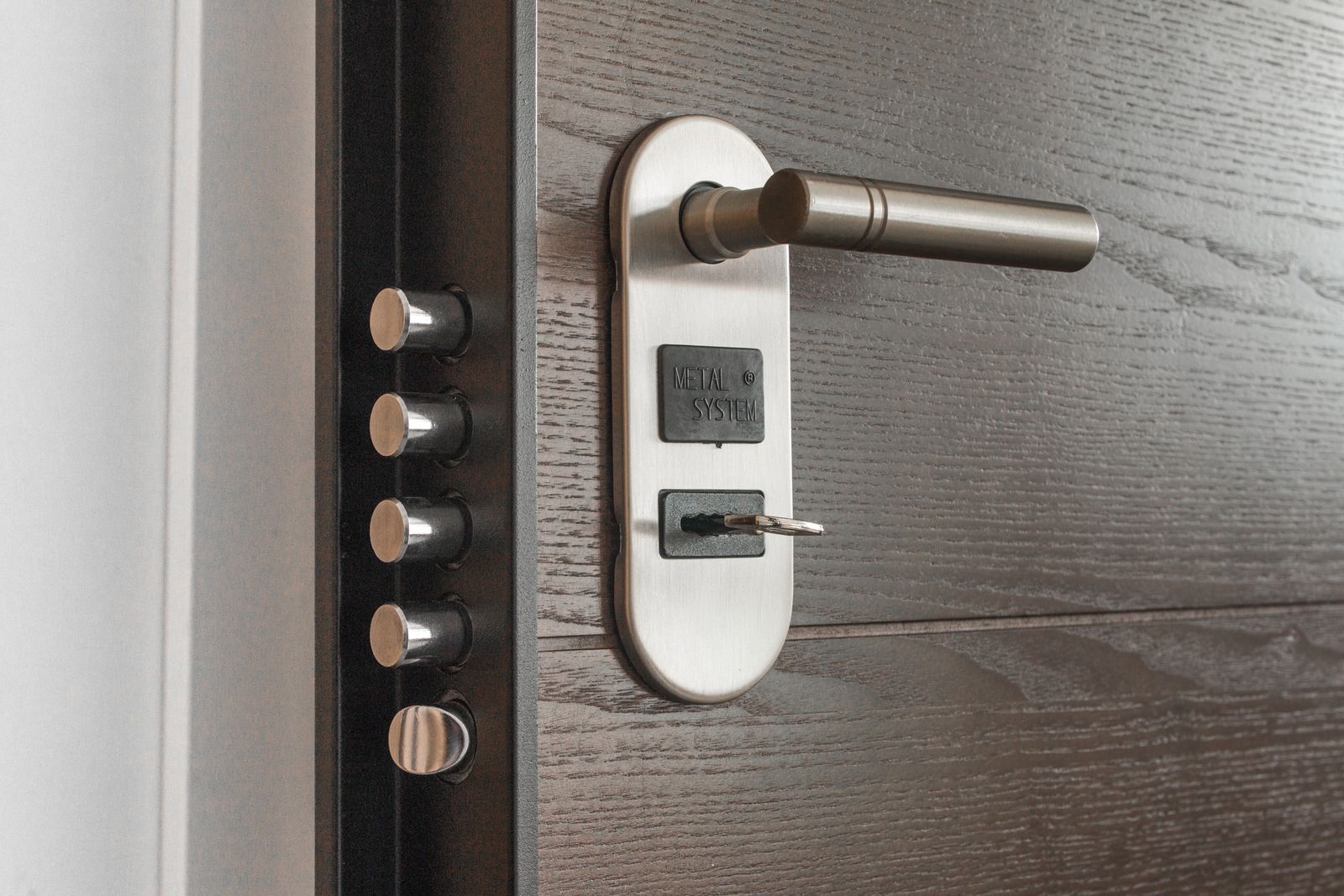
It is ten past eleven on a Tuesday in Croydon, and Sam is standing on a doorstep with a woman in a work lanyard who has been locked out since nine. The uPVC door opens in four minutes. The cylinder is the old snappable kind, so Sam fits a three-star anti-snap one while he is there and cuts her three keys. The bill is £207. She is tired, grateful, and wants to go to bed, and the last thing either of them wants is a conversation about bank details. Locksmithing invoicing is unlike any other trade: the job is short, the customer is stressed, the price has to be stated before you leave the house, and the paperwork has to be finished before you leave theirs.
State the price before you start the van
Locksmiths have a reputation problem that has nothing to do with most locksmiths: the stories of £500 lockouts and "it had to be drilled". The way you beat it is to be the one who tells the customer the price on the phone, and then invoices exactly that. Three numbers, every time:
- The call-out fee, by band: daytime, evening, night and bank holiday. The call-out covers getting to them and the first part of your time.
- The likely labour for the job as described: a non-destructive entry, a lock change, a snapped key extraction.
- A range for parts, because you cannot see the door yet. "A standard cylinder is £45 to £65 fitted; an anti-snap one is a bit more, and I will show you both."
Then send a text that repeats it. "Hi, Sam from SP Locks. On my way, 25 mins. Out-of-hours call-out £85, entry from £45, new cylinder if needed £55 to £75 fitted. Card or transfer on the day." That text is the quote for an emergency job, and it is what makes the invoice unarguable. Our post on call-out fees and emergency work covers wording the bands on your website and terms so they match.
The 14-day cooling-off right for contracts agreed in the home is generally treated differently for urgent repairs the consumer specifically requested; keep the record of the call and the text, and do not rely on that for anything beyond the urgent work itself.
What a locksmith's invoice needs
The legal basics apply (see how to write an invoice). A locksmith's invoice also wants:
- The call-out as its own line, with the band named. Not hidden in the labour.
- The method, briefly. "Non-destructive entry" tells the customer, and their landlord or insurer, that nothing was broken. If you had to drill, say so and say why.
- Parts, by name and standard. "Euro cylinder, 35/45, TS007 3-star, anti-snap" tells an insurer what was fitted and the customer why it cost more than the one it replaced. Record the key quantity.
- The property address, where it differs from the billing address, and the time of the visit.
- How it was paid. If paid on the spot, say so, or follow it with a receipt (more below).
What not to put on it: key codes, master-key details, alarm codes or anything that would help someone else get through the door. An invoice travels; keep it to what was done and what it cost.
Worked example: a late-night lockout and cylinder change
Here is Sam's invoice for the Croydon job. He is a sole trader and is not VAT registered, so there is no VAT anywhere on it. It was paid by card on the doorstep, and the invoice became a receipt a minute later.
SP Locks (Sam Pereira), 3 Station Road, Croydon CR0 2AB
Invoice INV-0319, dated 3 November 2026, 23:10. Payment due on completion.
Bill to: Ms A. Fletcher, Flat 2, 17 Park Lane, Croydon CR0 5DE. Property: as above.
Job: Lockout, front door, uPVC with euro cylinder. Quoted by text 22:35.
| Description | Qty | Rate | Amount |
|---|---|---|---|
| Emergency call-out, out of hours (after 8pm) | 1 | £85.00 | £85.00 |
| Non-destructive entry, uPVC door, no damage to door or frame | 1 | £45.00 | £45.00 |
| Euro cylinder, 35/45, TS007 3-star anti-snap, supplied and fitted | 1 | £65.00 | £65.00 |
| Additional keys cut | 3 | £4.00 | £12.00 |
| Total due | £207.00 | ||
Notes: Not VAT registered. Old cylinder was a standard (non-anti-snap) type and has been removed. 12-month guarantee on the cylinder fitted. Paid by card at 23:14; receipt REC-0088 issued.
Everything on it answers a question the customer, or her landlord, might ask next week: why was it £85 to come out (because it was eleven at night, as she was told at 22:35), was anything damaged (no), what was fitted (a named standard), and has it been paid (yes, and here is the receipt).
Paid before you leave the doorstep
A locksmith's customer is the most willing payer in the trades, for about fifteen minutes. They are inside, they are relieved, and you are standing there. Use that window. A lockout invoice that arrives on Thursday competes with the memory of a bad night.
Two ways to be paid in the window:
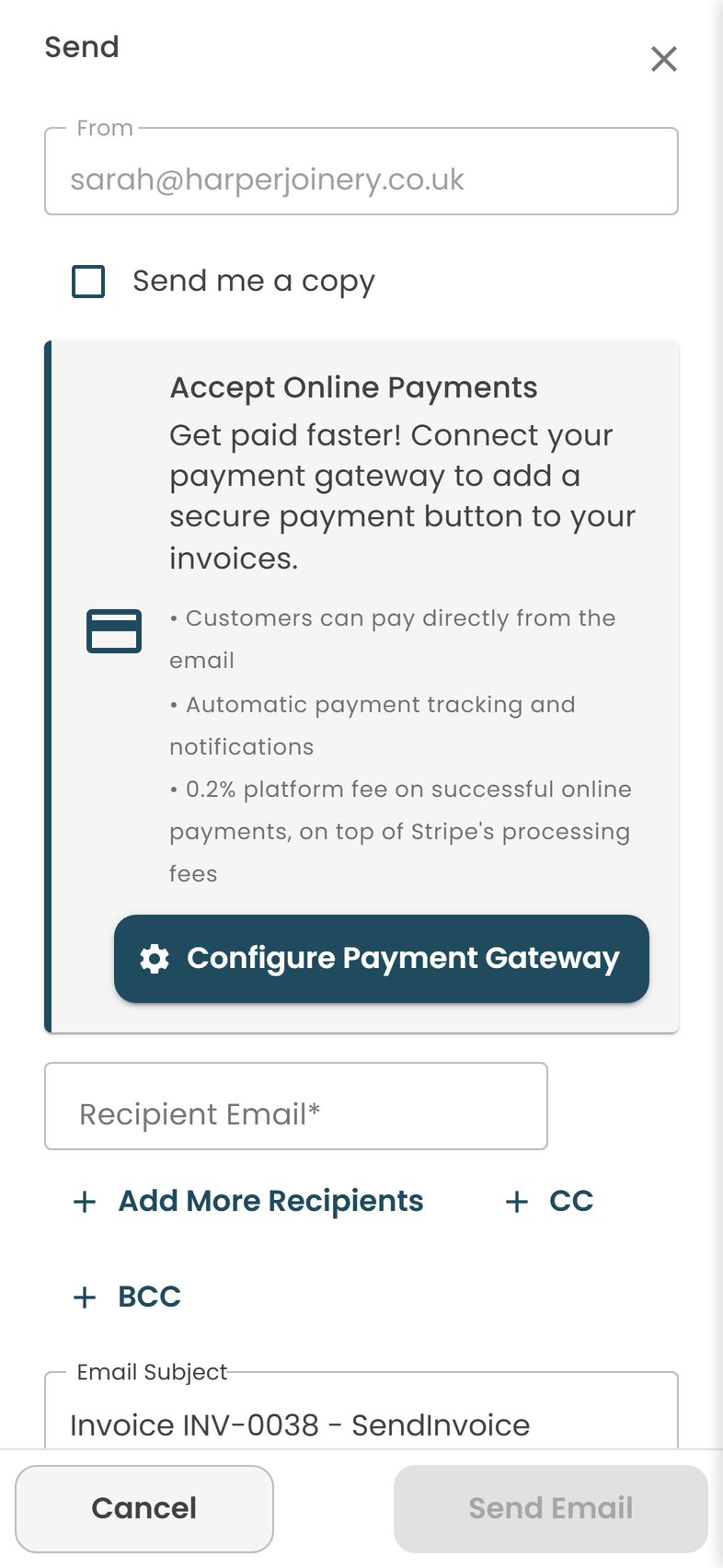
- A card payment link on the doorstep. Build the invoice on your phone, send it, and the customer gets an email with the PDF and a Pay button. They tap it on their own phone, pay by card, and the invoice flips to Paid while you are still packing the drill. No reader to carry or charge; in SendInvoice the fee is 0.2% on top of Stripe's own at the time of writing. Getting paid on the day compares this with readers and bank transfer.
- Bank transfer while you wait. Bank details are on the invoice; most customers can send a transfer in two minutes. Mark the invoice paid when it lands.
Cash is legal and some customers prefer it. Record it like any other payment: mark the invoice paid and issue a receipt. Cash that is invoiced and receipted is a normal sale; cash that is not is what HMRC is interested in. More in receipts for cash jobs.
The receipt on the doorstep
Locksmith customers ask for receipts more than most, because lockouts and lock changes get claimed back: from a landlord, an employer, an insurer after a burglary, a housemate who lost the keys. A paid invoice is legally enough, but a receipt is the document people expect, and it is thirty seconds' work: what was paid, when, by what method, for which invoice.
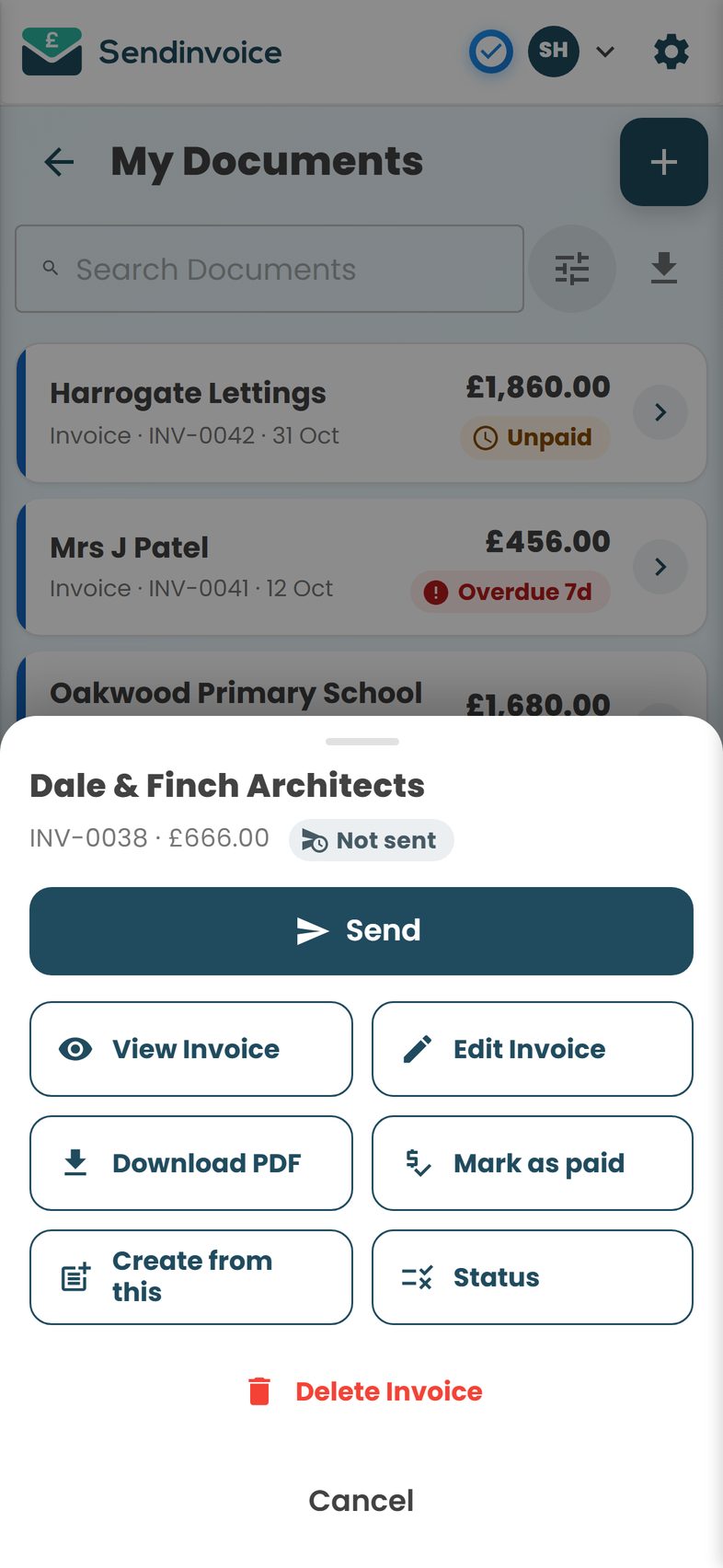
In SendInvoice, once the payment lands, you tap Create from this on the invoice and choose Receipt. The details carry over, the receipt gets its own number and a "From INV-0319" link, and you send it before the door closes. The two stay linked under the same customer, so when the letting agent rings in January asking for "the paperwork for Flat 2", it is one search. The differences between the documents are in invoice vs receipt and credit notes.
Landlords, letting agents and commercial work
A lot of steady locksmith work is not homeowners at all: lock changes between tenancies, a block of flats with a failed communal door, a shop whose shutter lock has seized. The invoice changes in a few ways:
- Property address on every invoice, separate from the agent's billing address, with the flat number. Agents manage hundreds of doors.
- Their reference. A purchase order number or job number, if they issue one; without it the invoice sits in a queue. Ask on the phone.
- Payment terms as agreed, often 30 days. If none are agreed with a business customer, the law treats 30 days as the default.
- Late payment. An agent, a landlord's company or a shop is a business, so the Late Payment of Commercial Debts (Interest) Act 1998 applies: statutory interest at 8% above base rate and a fixed sum (£40 for debts under £1,000 at the time of writing). With Ms Fletcher, a private householder, it does not, and you cannot add the fixed sums.
Keep the out-of-hours bands the same for business customers; just make sure the agent's out-of-hours line knows them before they send you to a flat at midnight. The detail on agents, POs and chasing is in invoicing landlords and letting agents.
Setting it up so the doorstep is easy
The doorstep invoice is quick only if the setup is done at the kitchen table, once: business details, logo and bank details in Settings; Stripe connected under Payment Gateway so the Pay button is live on every email; and saved items for everything you do more than twice, from each call-out band to the three or four cylinders you carry. After that the invoice is a matter of tapping lines, and for repeat letting agents the address fills itself in as you type.
Tell them the price before you set off, invoice exactly that, name the parts and the method, take the card on the doorstep, and hand them a receipt before you close the door. Do that at eleven at night in Croydon and you have not just been paid; you have been recommended.
Do this in SendInvoice
Keep your call-out bands and cylinders as saved items, build the invoice on the doorstep, take card payment through the Pay button and turn it into a receipt before you leave. Free to create and preview; £5 a month to send, remind and get paid by card.
Create a free invoice See the £5/month planFrequently asked questions
Should a locksmith charge a call-out fee?
Most do, and it is fair: you are driving across town at a moment's notice. The key is to state it before you set off, on the phone and ideally by text, along with your out-of-hours rate and a typical range for the likely job. Then put it on the invoice as its own line so the customer sees exactly what they were told.
How do I show out-of-hours rates on an invoice?
As a separate call-out line that names the band: "Emergency call-out, out of hours (after 8pm)". Keep the labour and parts lines at their normal descriptions. Customers accept a higher night rate; what they object to is a single large number with no explanation. Your website and your text confirmation should carry the same bands.
Can I take card payment on the doorstep without a card reader?
Yes. Send the invoice from your phone with a card payment link in the email; the customer opens it on their own phone and pays while you pack up. With SendInvoice the invoice flips to Paid automatically. A card reader works too, but the link means nothing to carry, charge or lose, and the invoice and the payment are already matched.
Does the customer need a receipt as well as an invoice?
Legally, a paid invoice is evidence enough, but customers, landlords and insurers often ask for a receipt. Issue one: it says the money was received, when and how. In SendInvoice you turn the paid invoice into a receipt in one tap, and the two stay linked. For a cash job, a receipt is the record both of you want.
Do I charge VAT as a locksmith?
Only if you are VAT registered. Many one-van locksmiths are not, and in that case you must not show or charge VAT. If you are registered, VAT applies at the standard rate to the call-out, labour and parts alike, and the invoice must show your VAT number, the rate and the VAT amount.
How do I invoice a letting agent or landlord for a lock change?
Put the property address on the invoice, the agent's job or purchase order number, the tenant's name if the agent wants it, and the agreed payment terms (often 30 days). The agent or landlord's company is a business customer, so late payment interest under the 1998 Act applies if they are slow, unlike with a private householder.