
Shona runs a three-person brickwork firm in Nottingham. Two years ago they laid the brick and block on eighteen houses for a main contractor, a £24,000 package, paid monthly, 5% retention. The first half of the retention came back at practical completion. The second half, £600, was due a year later and never arrived, because nobody asked for it. She only found it when her accountant queried an old balance. Six hundred pounds is a week of wages for an apprentice, and it was sitting in someone else's bank account because of a missing diary entry. Retention is not complicated. It is just easy to forget, and that is exactly what some contractors are counting on.
What retention is and why it exists
Retention is a slice of every payment, typically 3% to 5%, that the main contractor keeps back as security. The idea is simple: if you disappear, or your work turns out to have defects, the contractor has money in hand to put it right. In return, you get it back in two halves. The first half is released at practical completion, when the whole project is signed off as finished. The second half is released at the end of the defects period, commonly 12 months later, once any snags have been fixed.
Two things retention is not. It is not a discount; the full value of your work is still earned and still owed. And it is not something a contractor can simply decide to do. It has to be in the subcontract order or the terms you agreed. If your order says nothing about retention and the first payment notice has 5% missing, that is a question to ask straight away, politely, in writing.
The Housing Grants, Construction and Regeneration Act 1996, the Construction Act, sits in the background here. For construction contracts between businesses lasting more than 45 days it requires staged payments and a payment notice and pay less notice process, and it gives you the right to adjudication if a dispute cannot be settled. It does not apply to contracts with homeowners, which is one reason retention has no place on domestic jobs.
Check the contract before you lay a brick
Before you start, find these five things in the order or terms and write them on the inside cover of the job file:
- The percentage. 3% and 5% are the usual figures. Anything higher is worth pushing back on.
- The trigger for the first release. Practical completion of the whole project, or of your section of it? On a housing scheme that can be the difference between next spring and the one after.
- The length of the defects period. Usually 12 months; sometimes 6, occasionally 24.
- Whether release is tied to the main contract. Some orders say your retention is released when the contractor's own retention is released by its client. Clauses that make your payment depend on the contractor being paid are generally not enforceable under the Construction Act (with a narrow insolvency exception), but it is better to have the date clear from the start than to argue about it later.
- Any cap. Some contracts stop deducting once retention reaches a set sum.
How to show retention on an invoice
The principle is: show what you have earned, then show what is being held, then show what is payable. Never just invoice the net figure. If the gross value is not on the document, the retention disappears from everyone's records, including yours.
A clean layout, from the top:
- The lines for the work itself: labour and materials separately (a main contractor will want them split for CIS anyway).
- Gross value this period, and on cumulative applications the gross value to date less amounts previously certified.
- "Less retention 5% of £[gross]" as its own line with a minus figure.
- Any CIS deduction on the labour element.
- The amount payable.
- A note: "Retention held to date on this contract: £[running total]".
That last note is the one most small firms leave off, and it is the one that would have saved Shona £600. It makes the contractor's accounts team see the growing balance every month, and it means your own documents carry the total without a separate spreadsheet. For the CIS and reverse charge lines that sit alongside retention, see our CIS invoice example and the VAT reverse charge explained.
A worked example: a stage invoice with retention
Shona's firm is VAT registered and has gross payment status under CIS, so no CIS tax is deducted. The main contractor is VAT registered and not an end user, so the VAT domestic reverse charge applies: she charges no VAT and the contractor accounts for it. Here is stage 2 of the brickwork package.
Invoice INV-0472, application no. 2 from SM Brickwork Ltd, 15 Carlton Road, Nottingham NG3 2DJ. VAT no. GB 123 4567 89. UTR 98765 43210
To: Trentside Homes Ltd, Riverside House, Nottingham NG2 1AA. For the attention of the Quantity Surveyor
Contract: Brick and block package, Meadow Lane development, plots 1 to 18. Order TH-0455. Contract value £24,000.00
Valuation date: 25 November 2026. Final date for payment: 25 December 2026
| Description | Qty | Rate | Amount |
|---|---|---|---|
| Labour: blockwork to DPC and brickwork to first lift, plots 7 to 12 | 14 days | £400.00 | £5,600.00 |
| Materials: facing bricks, blocks, mortar, wall ties, DPC (delivery notes attached) | 1 | £2,400.00 | £2,400.00 |
| Gross value this application | £8,000.00 | ||
| Gross value to date £14,000.00, less previously certified £6,000.00 | £8,000.00 | ||
| Less retention 5% of £8,000.00 | -£400.00 | ||
| CIS: gross payment status, no deduction | £0.00 | ||
| VAT at 20%: reverse charge applies, customer to pay the VAT to HMRC | £0.00 | ||
| Amount payable | £7,600.00 | ||
Retention held to date on this contract: £700.00 (£300.00 from application 1, £400.00 from application 2). Reverse charge: customer to pay the VAT to HMRC. Payment by bank transfer to the account shown.
Everything a QS needs is there, and so is everything Shona needs in two years' time: the running retention figure, the contract reference and the dates. If she were not VAT registered, the VAT line would simply not appear; if she were VAT registered but working for a homeowner or a non-VAT-registered customer, she would charge VAT normally and the reverse charge note would go. Check with your accountant or HMRC if you are unsure which applies to you.
Tracking what you are owed
Retention is money you have earned that sits off your radar for a year or more. Across three or four contracts a small firm can easily have £2,000 to £5,000 out in retention at any time. You need one place that answers two questions: how much is held on each contract, and when is each half due?
A simple ledger does it, one row per contract: contractor, order number, retention percentage, retention held to date, practical completion date (expected, then actual), defects period end date, first release invoiced and paid, second release invoiced and paid. Update it every time you send an application. Put the two release dates in your phone calendar the day you learn them, with a reminder a week before each.
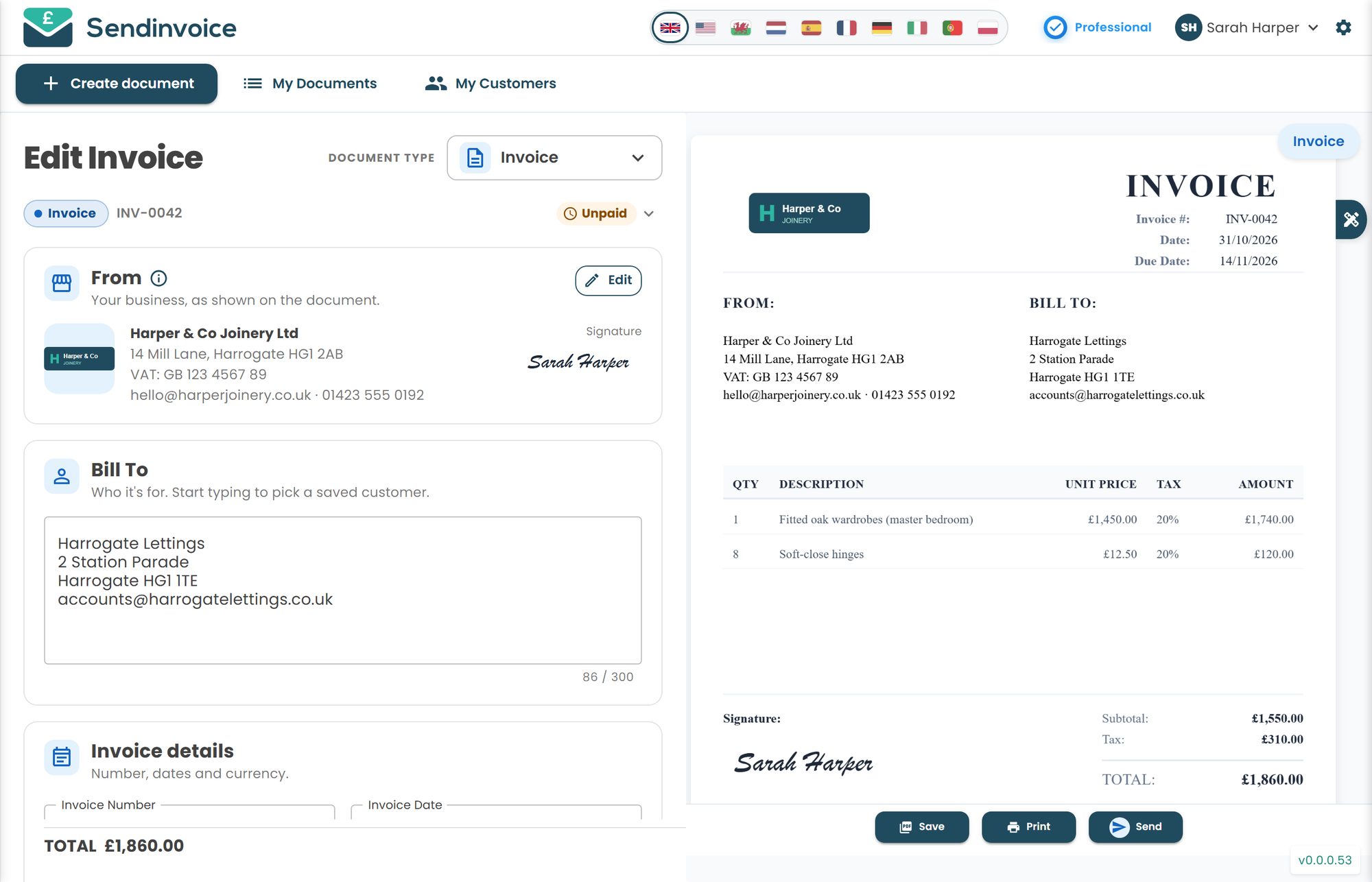
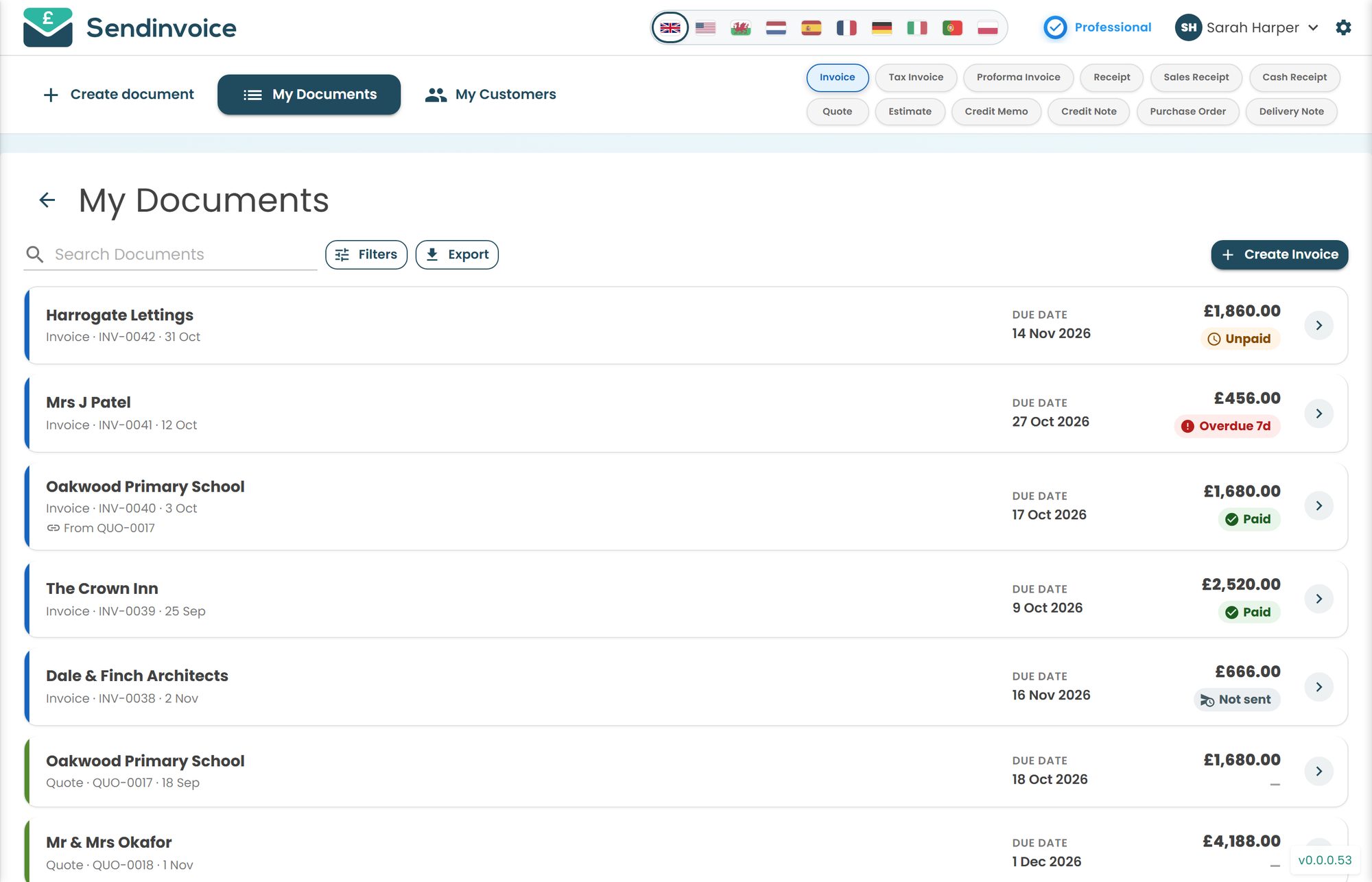
Your invoices carry half the ledger for you if you add the "retention held to date" note each month. In SendInvoice, every application and invoice for the contract is in My Documents with its amount and Paid or Unpaid status; filter by customer and the whole contract is on one screen, and the running retention figure is in the notes of the latest one. When a release falls due you raise a separate invoice for it, so it shows as Unpaid in red until the money lands, rather than hiding inside an old balance.
Chasing release at practical completion and after the defects period
Nobody will offer you your retention. You apply for it, like any other payment, and you do it on the day it becomes due.
First half, at practical completion. Find out the PC date. Ask the site manager or QS as the project nears the end; it is often certified by the client's architect or contract administrator, and the contractor knows the date. On that date, or as soon as you know it, send a retention release invoice:
Invoice INV-0519 from SM Brickwork Ltd to Trentside Homes Ltd
Contract: Brick and block package, Meadow Lane, order TH-0455
| Description | Amount |
|---|---|
| Release of first half of retention following practical completion on 14 March 2028. Total retention held £1,200.00; this release 50% | £600.00 |
| VAT at 20%: reverse charge applies, customer to pay the VAT to HMRC | £0.00 |
| Amount payable | £600.00 |
Retention remaining after this release: £600.00, due at the end of the defects period on 14 March 2029.
Second half, after the defects period. Twelve months is long enough for everyone to move on. Your calendar reminder fires, you check that any snags raised against your work were attended to (keep the emails), and you send the second release invoice the same way, quoting the end-of-defects date. If you have never been told of any defects, say so on the invoice.
If either release is not paid within the contract's payment period, chase as you would any business invoice. A main contractor is a business, so the Late Payment of Commercial Debts (Interest) Act 1998 applies: statutory interest at 8% above the Bank of England base rate plus fixed compensation of £40, £70 or £100 per invoice depending on its size, at the time of writing. A formal reminder quoting the contract clause, the PC date and the Act tends to work; the escalation ladder in how to chase an unpaid invoice is the template. If the contractor says it is waiting on its own client, ask for the expected date in writing and take advice if it keeps slipping; adjudication under the Construction Act is designed for exactly this kind of dispute. If the contractor has gone bust, register as a creditor straight away, because retention is often what gets lost in an insolvency.
A note on homeowners and small jobs
Retention is an industry convention between businesses. It does not belong on a kitchen extension for a private homeowner, and the Construction Act's machinery does not apply to residential occupiers anyway. If a homeowner asks to "keep a bit back until we are happy", the better answer is a short snagging visit before the final invoice and a written guarantee on the invoice itself. For how to structure deposits, stages and the final invoice on domestic work, see deposits and staged payments for tradespeople; and for the wider picture of working for contractors, invoicing a main contractor as a subcontractor.
Do this in SendInvoice
Show retention as a clear line on every application, carry the running total in the notes, and raise the release invoices as their own documents so they sit in red until they are paid. Free to create and preview; £5 a month to send, remind and get paid.
Create a free invoice See the £5/month planFrequently asked questions
What is retention on a construction contract?
A percentage of each payment, typically 3% to 5%, that the main contractor holds back as security against defects. Half is usually released at practical completion of the project and the other half after the defects period, often 12 months later. It must be in the contract; if your order does not mention retention, the contractor should not be deducting it.
How do I show retention on an invoice?
Show the gross value of the work first, then a separate line, for example "Less retention 5% of £8,000.00: -£400.00", then the amount payable. Add a note with the retention held to date on this contract. Keep the gross figure visible so both sides can see what has been earned and what is being held.
Do I charge VAT on the retention?
If you are VAT registered, VAT on a retained amount is generally accounted for when the retention is released and invoiced, not when it is first held, so the release invoice carries its own VAT treatment. Under the construction reverse charge no VAT is charged either way. Check the current HMRC guidance or ask your accountant for your own situation.
Can a contractor refuse to release retention because its own client has not paid?
On contracts covered by the Construction Act, clauses that make your payment depend on the contractor being paid are generally not enforceable, with a narrow exception for insolvency further up the chain. If a contractor says it is waiting for its client, ask for the release date in writing and take advice if it keeps slipping.
What if retention is still outstanding years later?
It is still owed. Find the contract, your invoices showing retention held, and any evidence of practical completion and the end of the defects period. Send a retention release invoice with a short covering letter, then chase as you would any business debt, with statutory interest under the Late Payment of Commercial Debts (Interest) Act 1998 if it comes to that.
Should I accept retention from a homeowner?
Usually not. Retention is a construction industry habit between businesses; the Construction Act does not cover contracts with homeowners and there is no custom of holding money back on domestic work. If a homeowner wants comfort about defects, offer a written guarantee and a short snagging period before the final invoice instead.