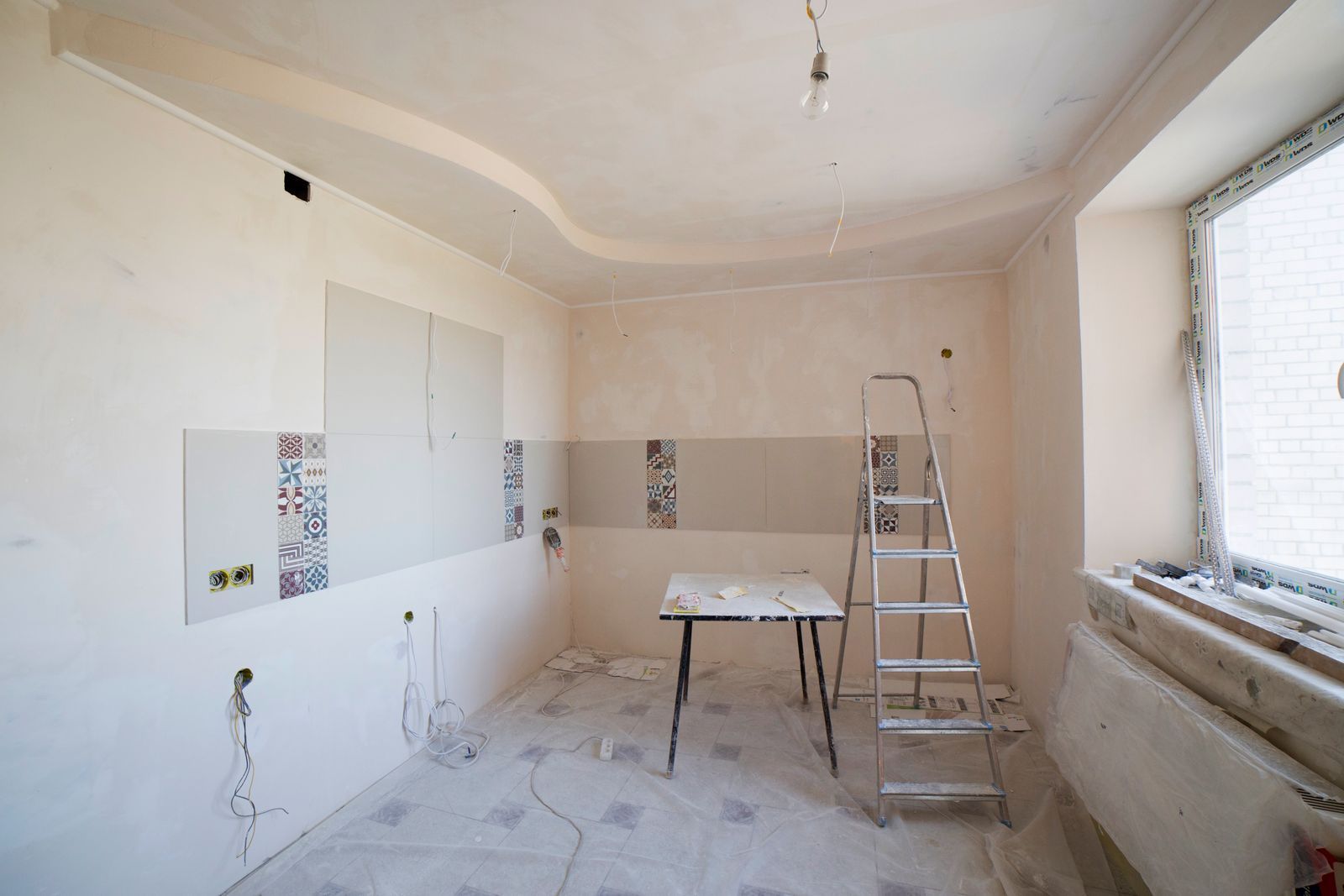
Dean fits kitchens in and around Wakefield. Day one at the Ashworths' is a skip, a crowbar and a 1990s melamine kitchen in pieces by lunchtime. Day eleven is a quartz worktop, a tap that does not drip and a customer who says "it looks like the picture". In between is £7,860 of work that Dean has to be paid for in a way that keeps his van fuelled and the customer comfortable. That means three invoices, not one. Here is how to set them up.
A kitchen is three invoices, not one
A kitchen refit is the awkward middle ground of trade jobs. It is too long for "pay me at the end" to be safe, and too short for the monthly applications a builder might use on an extension. The pattern that works for most fitters is three payments tied to things the customer can see:
- Deposit on acceptance of the quote, raised on a proforma invoice. Typically 20-30%, or enough to cover what you are buying up front.
- Stage payment at "units in": the old kitchen is gone, the carcasses are fixed and level, first-fix plumbing and electrics are done. The customer can stand in the room and see the shape of their kitchen.
- Balance on completion, after you and the customer have walked the snag list together.
Each stage gets its own invoice with its own number. The final invoice shows the whole job and deducts what has already been paid, so the customer sees one clean story and you have a paper trail that would stand up if it ever had to. For the general principles behind this, see deposits and staged payments for tradespeople; this post is about the kitchen-shaped specifics.
Before day one: the quote does the heavy lifting
Everything that goes wrong on a kitchen invoice was decided, or not decided, at the quote. Dean's quote to Sarah and Tom Ashworth was £6,370 plus VAT (his firm is VAT registered) and ran to a page and a half. The useful bits:
- What is in. Strip out and disposal, fitting 14 customer-supplied units, plumbing to sink, tap and dishwasher, electrics by his sub-contracted electrician including the certificate, worktop liaison, upstands, a 4 m² tiled splashback, and all the sundries.
- What is out. The units and worktop themselves (customer's order), the flooring, decorating after, moving the gas hob (that would need a Gas Safe engineer and a separate quote), and anything found behind the old units.
- Payment stages, with the percentages and what triggers each one.
- A line asking the customer to confirm they want work to start within 14 days of accepting. Because Dean quoted at their kitchen table, this is an off-premises consumer contract and the Ashworths have a 14-day right to cancel under the Consumer Contracts Regulations 2013. With that written request, he can charge for work done if they cancel part way through. Without it, he is on thinner ice.
Stage one: the deposit on a proforma
Dean asks for 30% on acceptance: £1,911 plus VAT, £2,293.20. He does not send a normal invoice for it, because nothing has been supplied yet. He sends a proforma, which says "this is what is due before we start" without entering his sales ledger as a sale. Once it is paid he marks it paid and, because he is VAT registered, the date the money lands is the tax point for that chunk of VAT. Check that last part with your accountant; the detail matters more for VAT-registered fitters than for everyone else.
The deposit covers the things Dean pays for before he earns anything: skip hire, the electrician's first-fix day, pipe and fittings, and two days of his own labour he would otherwise be funding. It is not a profit margin, and the money stays accessible. If the Ashworths' worktop supplier goes bust and the job collapses, Dean still owes the deposit back less anything he has legitimately spent at their request.
Stage two: units in
On day four the old kitchen is in the skip, the walls are patched, the carcasses are fixed and dead level, the sink waste is roughed in and the electrician has run his cables. The Ashworths can see a kitchen. That is the trigger for stage two: 40% of the quoted price, £2,548 plus VAT, £3,057.60.
This is a proper invoice, numbered in sequence with Dean's others. He builds it from the quote in a couple of taps so the descriptions match word for word, changes the amount to the stage percentage, and sends it from the Ashworths' driveway with a Pay button in the email. Sarah pays by card before he has reached the end of the street.
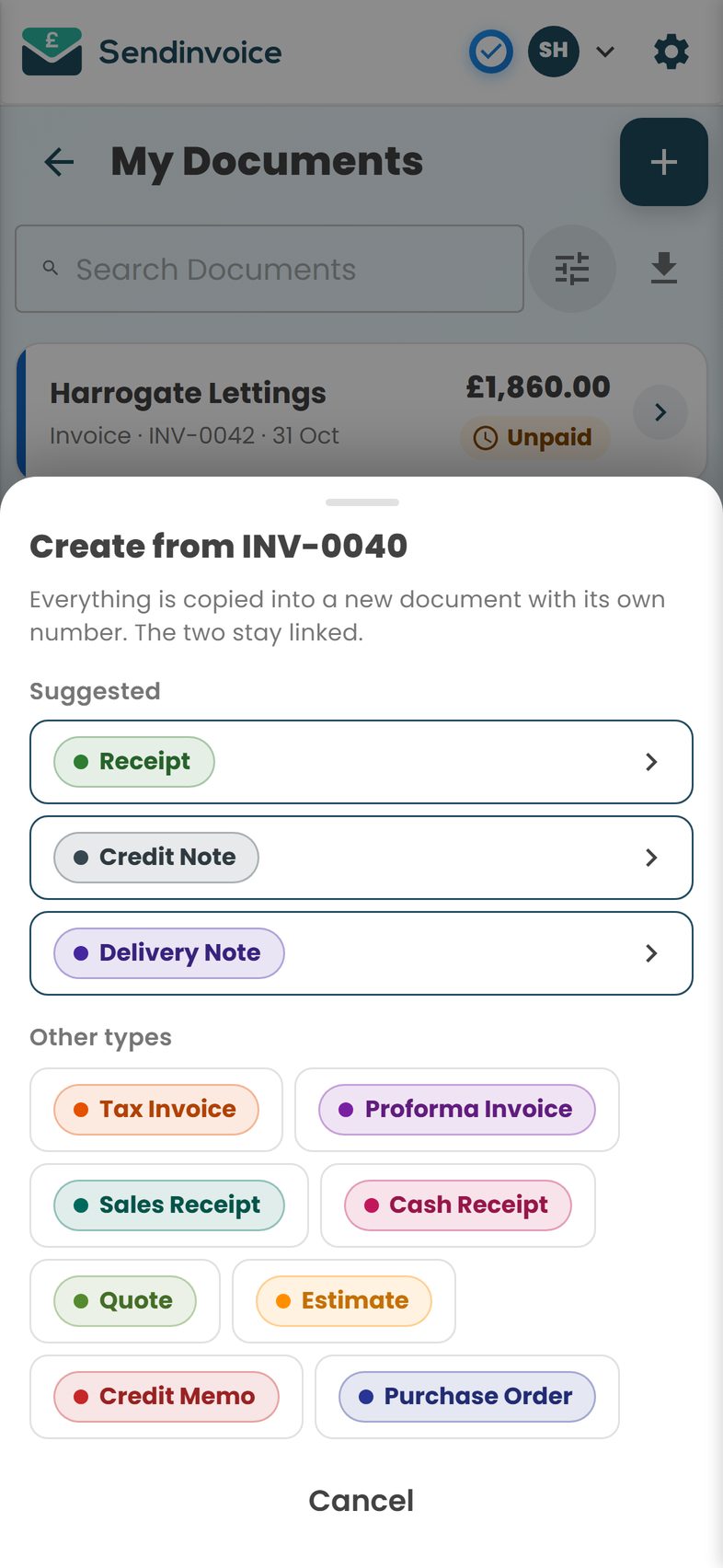
Why "units in" and not "day five" or "half way"? Because a visible milestone is impossible to argue with. "Half way" invites a debate about whether you are. "The carcasses are in and level" is a fact in the room.
Working with suppliers: whose order is it?
Kitchen fitters sit between the customer and a showroom or trade supplier, and the invoice depends on which way you set that up.
| Arrangement | On your invoice | Good | Watch out |
|---|---|---|---|
| Customer orders units on their own account | Labour and sundries only | No supplier credit, no margin at risk, damaged doors are their claim | Delivery delays push your dates; agree who pays for a lost day |
| You order on your trade account and resell | Units as a line (marked up if you choose), plus labour | Trade discount, one point of contact for the customer | You carry the credit, the returns and, if VAT registered, VAT on the whole supply |
| Hybrid: customer buys units, you supply worktop or appliances | Those items as lines, at your price | You control the parts that affect your fit | Be explicit in the quote about which items are yours |
Dean prefers the first arrangement for units and worktops. He supplies what he controls: the waste kit, the tap connectors, the fixings, the silicone, the tiles for the splashback. Those go on the invoice as sundries at a sensible figure. If a supplier delivers a door with a chip in it, the Ashworths ring the showroom and Dean carries on fitting. For a longer look at marking up materials and keeping receipts, read labour and materials on an invoice.
Variations: the plinth lights problem
On day six Tom asks whether Dean could "do some of those lights under the units while you're at it". Dean says yes, and sends a text before he leaves: "Plinth and under-unit LED strip, supply and fit, £180 plus VAT. Reply yes and I'll pick it up tomorrow." Tom replies "Yes please". That text is now part of the contract.
On the final invoice the extra appears as its own line with the date it was agreed. It never gets folded into "fitting" or added quietly to the sundries. Customers who agreed something in writing pay for it without a murmur; customers who are surprised by it do not. The whole approach is in invoicing variations and extras on a job.
The snag list and the final invoice
Day eleven. The worktop is in, the splashback is grouted, the dishwasher has run a cycle without flooding anything. Dean does not send the balance invoice yet. He walks the kitchen with Sarah with his phone out and types the snags into a note as she spots them: a drawer front a millimetre proud, a bead of silicone that needs tidying, a cupboard door that catches. Twenty minutes with a screwdriver and a wet finger, and the list is clear.
Then, and only then, he sends the final invoice. It shows the whole job, the variation, the VAT, and the two payments already received. The balance is what is left.
DW Kitchens · Invoice INV-0215 · Date 14 November 2026 · From QUO-0188 · VAT No. GB 000 0000 00
Bill to: Sarah and Tom Ashworth, 14 Orchard Close, Wakefield · Job: Kitchen refit, 14 Orchard Close · Due: 7 days
| Description | Qty | Unit price | Amount |
|---|---|---|---|
| Strip out existing kitchen, disconnect services, dispose (incl. skip) | 1 | £520.00 | £520.00 |
| Fit 14 customer-supplied base and wall units, plinths, cornice and end panels | 1 | £3,100.00 | £3,100.00 |
| Plumbing: sink, tap, dishwasher connection, waste kit and isolation valves | 1 | £480.00 | £480.00 |
| Electrical first and second fix by registered electrician, incl. certificate (ref. supplied) | 1 | £780.00 | £780.00 |
| Worktop liaison with templating company, fit upstands and sink cut-out seal | 1 | £640.00 | £640.00 |
| Tiled splashback, 4 m², customer's tiles, adhesive and grout supplied | 1 | £560.00 | £560.00 |
| Sundries: fixings, silicone, pipe and fittings, tap connectors | 1 | £290.00 | £290.00 |
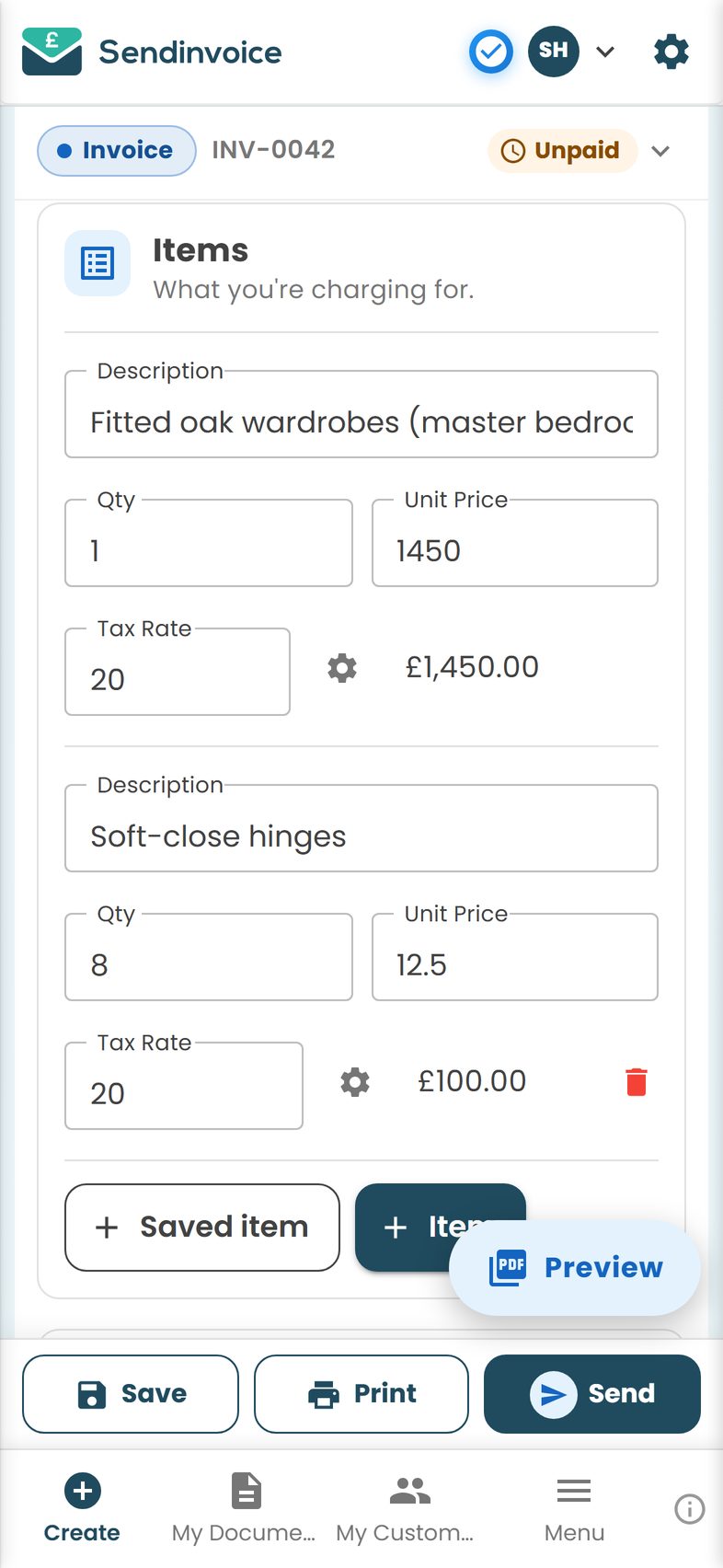
| Variation agreed by text 9 Nov: plinth and under-unit LED lighting, supply and fit | 1 | £180.00 | £180.00 |
| Net total | £6,550.00 | ||
| VAT at 20% | £1,310.00 | ||
| Total for the job | £7,860.00 | ||
| Less deposit received 28 Oct (PRO-0031) | -£2,293.20 | ||
| Less stage payment received 5 Nov (INV-0212) | -£3,057.60 | ||
| Balance now due | £2,509.20 | ||
Notes: Snag list of 14 Nov completed and signed off by customer. Electrical installation certificate issued by the electrician and left with the customer. Workmanship guaranteed for 12 months; appliances and units under their manufacturers' guarantees. Pay by card using the Pay button or by bank transfer to the details below.
Because Dean is VAT registered, each of the three documents carries its own VAT, and the final invoice simply reconciles them for the customer. If you are not VAT registered, the structure is identical with the VAT line removed and no mention of VAT anywhere; see invoicing when you are not VAT registered.
Getting the balance paid the same day
The customer is most willing to pay in the half hour after the snag walk, standing in a kitchen that looks like the picture. Use that. Send the final invoice from your phone before you load the van, with a card payment link in the email, and say out loud: "I've just sent the final invoice, there's a Pay button on it if that's easier than a transfer." Many customers tap it while you are still packing up.
If they prefer bank transfer, mark the invoice paid when the money lands and send a receipt if they ask; some will want one for a home-improvement loan or a landlord. If it does not land, the invoice turns Overdue in red after the seven days and the reminders are a tap away, friendly first.
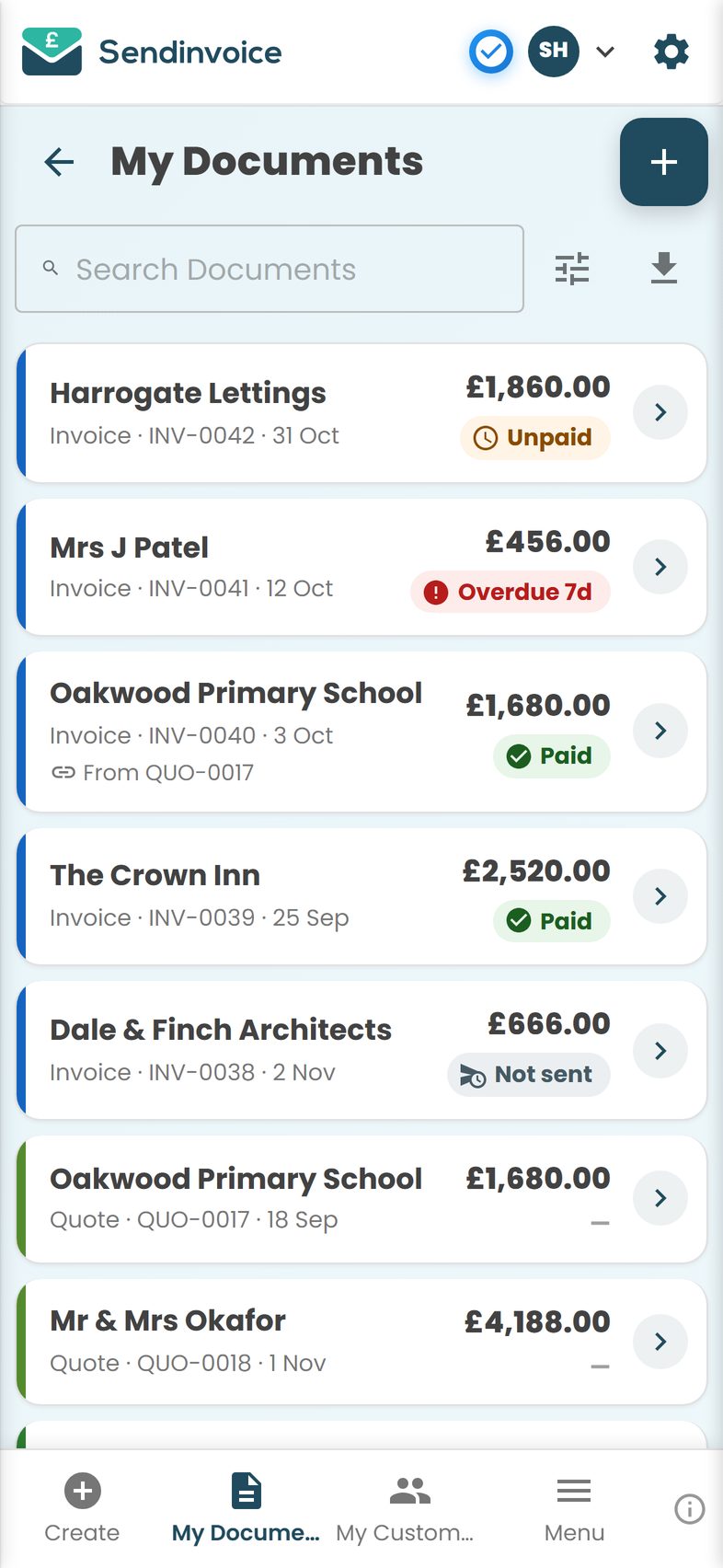
One last habit: keep the quote, the three documents, the variation text and a photo of the finished snag list together. On a kitchen, the paperwork is thin for most of the job and then matters enormously for about a week at the end. Make it the easy part.
Do this in SendInvoice
Quote at the kitchen table, turn it into a proforma for the deposit and stage invoices as the units go in, and send the final invoice with a Pay button before you have loaded the van. Free to create and preview; £5 a month to send, take card payments and see every stage paid or unpaid.
Create a free invoice See the £5/month planFrequently asked questions
How much deposit should a kitchen fitter ask for?
There is no legal maximum for consumer jobs. Most fitters take 20-30% of the quoted price, or enough to cover anything they are buying themselves before day one. Raise it on a proforma invoice, keep the money accessible, and remember it is still owed back if you cannot do the job. The deposit is for your costs, not a bonus.
Should I invoice the kitchen units or let the customer buy them?
Either works, but be deliberate. If the customer orders from the showroom on their own account, the units never touch your invoice and a damaged door is their claim, not yours. If you buy on your trade account, you can mark them up but you carry the supplier's credit and any disputes. Many fitters only supply the sundries they control.
Can I charge for extras the customer asked for mid-job?
Yes, if you agreed them. Get every variation in writing before you do it, even a text saying 'Yes please, go ahead with the plinth lights at £180'. Then add it as its own line on the final invoice with the date it was agreed. Unwritten extras are the single biggest cause of arguments at the end of a kitchen.
Do I have to finish the snag list before I invoice the balance?
You should, and it pays. Walk the kitchen with the customer, write the snags down, fix them, then send the final invoice the same day. A customer standing in a finished kitchen with nothing left to complain about pays quickly. A balance invoice sent with three snags outstanding tends to sit until the snags are done anyway.
Do I charge VAT on a kitchen fit?
Only if you are VAT registered, in which case VAT applies at the standard rate to the whole supply, labour and materials together, for an ordinary refit in an existing home. Some work qualifies for reduced or zero rates, such as certain new-build jobs, so check HMRC's notices or your accountant. If you are not VAT registered, do not mention VAT at all.
What if the customer cancels after I have bought materials?
For a contract agreed in the customer's home, they usually have a 14-day cancellation right under the Consumer Contracts Regulations 2013. If they asked you in writing to start within those 14 days, you can charge for work done. Put that request in your quote acceptance so it is there when you need it, and hold off ordering bespoke items until the 14 days have passed where you can.